
Artificial Intelligence is rapidly transforming how organizations operate, innovate, and compete. From predictive analytics and automation to advanced manufacturing and intelligent decision-making, AI technologies are becoming a critical driver of business growth and digital transformation.
Behind every successful AI initiative lies a powerful and scalable infrastructure capable of processing massive volumes of data, training complex machine learning models, and delivering real-time insights. Traditional IT environments are often not designed to handle the intensive computational workloads required by modern AI systems.
AI Infrastructure provides the high-performance computing platforms, GPU acceleration technologies, high-speed networking, and scalable storage systems necessary to support artificial intelligence workloads. By deploying specialized AI infrastructure architectures, organizations can accelerate model training, optimize data processing pipelines, and unlock the full potential of artificial intelligence across their operations.
Our AI Infrastructure Services enable organizations to design, deploy, and optimize advanced computing platforms that support modern AI workloads including machine learning, deep learning, large language models, computer vision, and industrial automation systems.
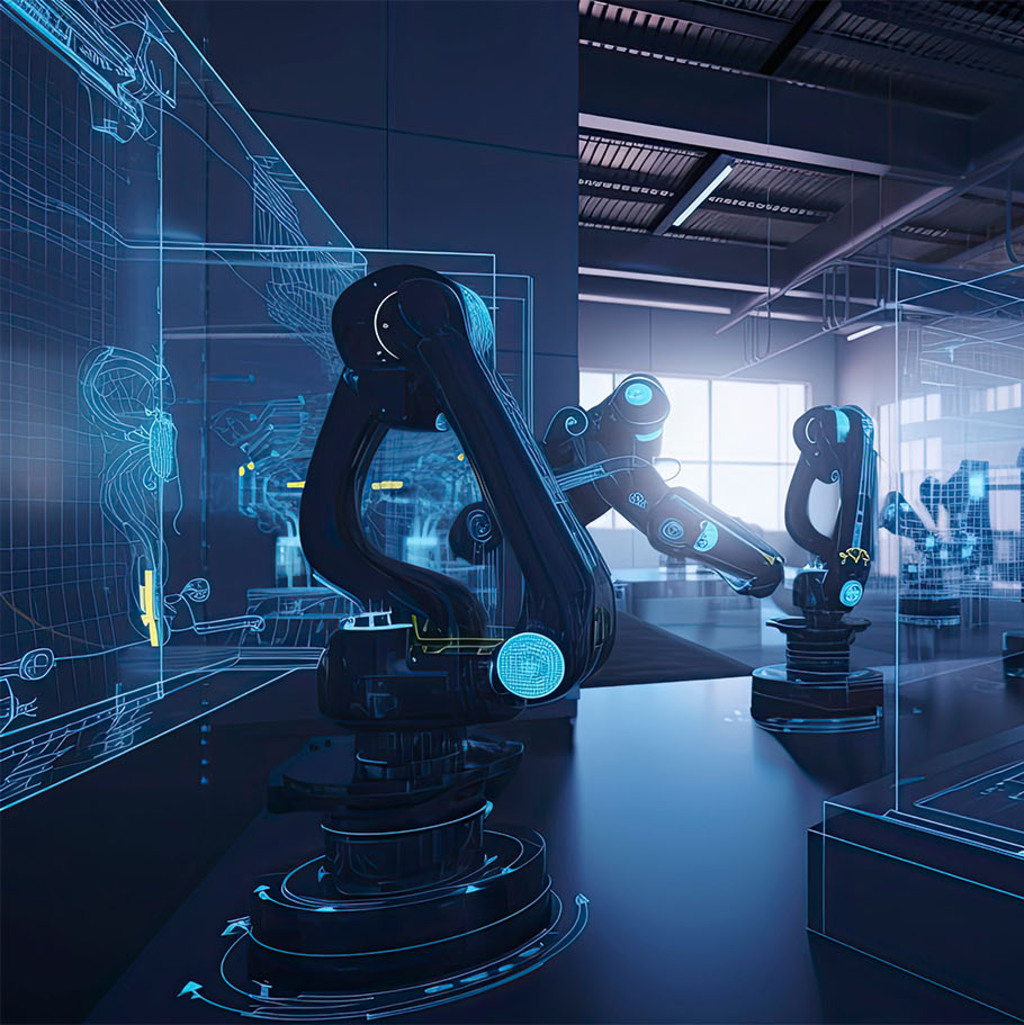

AI workloads require massive computational resources, particularly when training deep learning models or processing large datasets. High-performance computing platforms powered by GPUs and AI accelerators significantly reduce training time and improve processing efficiency.
Modern AI compute architectures support:
♦ GPU-accelerated machine learning workloads
♦ Distributed AI model training
♦ Large-scale data analytics
♦ Scientific computing and simulation
These platforms enable organizations to train advanced AI models in hours rather than days or weeks.
Graphics Processing Units (GPUs) have become the backbone of modern AI computing due to their ability to process thousands of parallel operations simultaneously. GPU clusters provide the computational performance required for deep learning training, natural language processing, and generative AI applications.
GPU-accelerated environments allow businesses to:
♦ Accelerate AI model training
♦ Process large datasets in real time
♦ Support complex neural network architectures
♦ Enable high-performance research and development environments
GPU infrastructure plays a critical role in supporting next-generation AI applications including generative AI and advanced automation.
AI workloads require extremely fast communication between compute nodes, GPUs, and storage systems. High-speed networking technologies enable efficient data movement within AI clusters and distributed computing environments.
Modern AI networks rely on technologies such as:
♦ High-bandwidth Ethernet networking
♦ Low-latency interconnects
♦ GPU-direct communication
♦ Scalable cluster networking architectures
These capabilities ensure optimal performance for distributed AI workloads.
Artificial intelligence projects often rely on massive datasets that must be processed quickly and efficiently. AI storage platforms provide high throughput, low latency, and scalable capacity to support data-intensive workloads.
AI storage environments typically support:
♦ Large-scale data lakes
♦ High-performance parallel file systems
♦ Object storage for AI training datasets
♦ Scalable storage for model checkpoints & outputs
These platforms enable organizations to train advanced AI models in hours rather than days or weeks.
AI infrastructure relies on specialized hardware and computing platforms developed by leading technology vendors. These platforms provide the performance, scalability, and reliability required for enterprise AI workloads.

NVIDIA is one of the leading providers of AI computing platforms and GPU acceleration technologies. NVIDIA GPUs are widely used in machine learning, deep learning, and generative AI workloads.
NVIDIA platforms support:
>> GPU accelerated AI computing
>> Large language model training
>> Generative AI applications
>> High-performance data analytics
Technologies such as CUDA, AI software frameworks, and GPU clusters make NVIDIA a foundational platform for modern AI environments.

Hewlett Packard Enterprise delivers enterprise AI infrastructure solutions through high-performance computing platforms and integrated AI systems.
>> HPE AI infrastructure includes:
>> HPC clusters for AI training
>> Scalable AI storage platforms
>> High-performance networking solutions
>> Integrated AI platforms for enterprise workloads
These systems enable organizations to deploy reliable and scalable AI environments within modern data centers.

Supermicro provides high-performance server systems optimized for AI and machine learning workloads. Their AI-ready platforms support multi-GPU architectures designed for deep learning training and inference environments.
Supermicro AI systems offer:
>> GPU-dense server architectures
>> Scalable AI clusters
>> High-performance storage integration
>> Energy-efficient compute platforms
These systems are commonly used in AI research environments and enterprise AI data centers.

AMD has developed advanced processors and GPU accelerators designed for high-performance computing and artificial intelligence workloads.
AMD platforms provide:
>> Powerful CPU and GPU architectures
>> AI accelerator technologies
>> Scalable compute environments
>> High-performance data processing capabilities
These technologies offer strong alternatives for organizations building modern AI infrastructure platforms.
















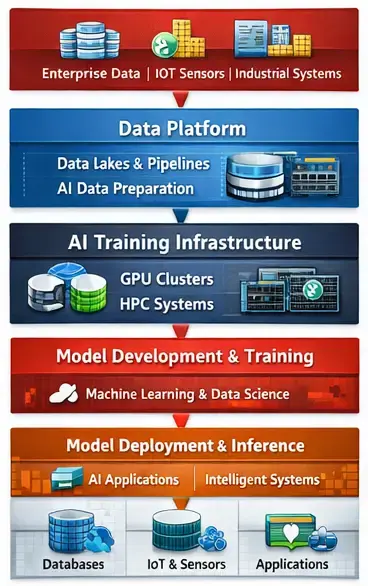
The growing adoption of artificial intelligence has introduced a new concept in enterprise IT architecture known as AI Factories. An AI Factory is an integrated infrastructure environment designed specifically for developing, training, deploying, and scaling AI models at enterprise scale.
AI factories combine high-performance GPU clusters, large-scale data storage platforms, and advanced networking technologies to create environments where data can be continuously transformed into intelligence.
These environments enable organizations to:
>> Process massive data sets for AI training
>> Train complex deep learning models faster
>> Deploy AI-driven applications across business operations
>> Continuously improve models through iterative learning cycles
AI factories act as the production engine for artificial intelligence, transforming raw data into insights, automation, and competitive advantage.
Artificial intelligence is having a profound impact on modern manufacturing and industrial operations. AI-powered systems enable manufacturers to automate complex processes, analyze production data, and improve operational efficiency.
AI infrastructure enables advanced capabilities such as:
>> Predictive maintenance for industrial equipment
>> AI-driven quality inspection and defect detection
>> Autonomous production optimization
>> Intelligent supply chain forecasting
>> Real-time process monitoring and analytics
By integrating AI platforms into manufacturing environments, organizations can significantly improve operational efficiency while reducing downtime and production costs.
Organizations that invest in modern AI infrastructure gain significant competitive advantages across their industries.
While AI presents enormous opportunities, organizations must also address several challenges when deploying AI infrastructure.
These challenges include:
>> High computational requirements for AI training
>> Massive storage needs for data processing
>> Integration with existing enterprise systems
>> Security and governance of AI data
>> Skills gaps in AI infrastructure management
A well-designed AI infrastructure architecture addresses these challenges through scalable computing platforms, optimized data pipelines, and secure operational frameworks.
Artificial intelligence is rapidly becoming one of the most powerful drivers of innovation in the digital economy. Organizations that invest in modern AI infrastructure today position themselves to lead in tomorrow’s technology landscape.
By combining high-performance computing, advanced data architectures, and scalable AI platforms, businesses can transform raw data into intelligence, automation, and strategic advantage.
Our AI Infrastructure Services help organizations design and deploy the powerful computing environments required to support the next generation of intelligent applications and digital innovation.
To successfully deploy artificial intelligence environments, organizations require more than powerful hardware. They need a complete ecosystem that includes architecture design, high-performance computing platforms, optimized data pipelines, and operational support.
Our AI Infrastructure Services cover the entire lifecycle of AI platform deployment—from initial architecture design to optimization and operational support.
Designing AI infrastructure requires careful planning around data pipelines, compute performance, storage scalability, and network architecture. Our experts assess business objectives and AI workload requirements to design optimized infrastructure platforms capable of supporting machine learning, deep learning, and generative AI applications.
This includes capacity planning, hardware selection, cluster architecture, and integration with existing enterprise IT environments.
Modern AI workloads depend heavily on GPU acceleration technologies to handle massive parallel processing tasks. We design and deploy GPU-powered computing environments that significantly accelerate AI model training and inference workloads.
These platforms support high-performance deep learning frameworks, data analytics workloads, and next-generation generative AI applications while maintaining scalability and operational efficiency.
Artificial intelligence systems rely on enormous volumes of structured and unstructured data. We deploy scalable AI storage architectures that support high throughput and low latency data access for AI training pipelines.
These environments typically include distributed storage platforms, parallel file systems, and high-performance data lakes capable of supporting continuous data ingestion and model training workflows.
Efficient data transfer between compute nodes, GPUs, and storage systems is critical for AI performance. We design high-speed networking architectures that enable distributed AI training and high-performance cluster computing.
These networks utilize advanced technologies such as low-latency Ethernet fabrics and optimized interconnects to support large-scale AI clusters and data-intensive workloads.
Building an AI infrastructure environment is only the first step. Organizations must also integrate AI platforms with business applications, data pipelines, and operational workflows.
We support the integration of machine learning environments, data science platforms, and AI application frameworks to ensure that AI models can be deployed efficiently and deliver real business value.
AI environments require continuous monitoring, optimization, and scaling to maintain optimal performance. Our operational services include infrastructure monitoring, performance tuning, capacity planning, and lifecycle management.
These services ensure that AI platforms remain efficient, scalable, and aligned with evolving business needs.
Let's have a quick talk
Quick Assist
Comprehensive IT Services
Managed Services (MSP)
Network Services
Backup & Data Protection Services
Cloud Computing Services
DevOps & Linux Services
Vendor Specific Services
IT Solutions & Architecture Services
Extensive IT Consultation