



The Modern Cyber Threat Landscape and the Fragility of Email
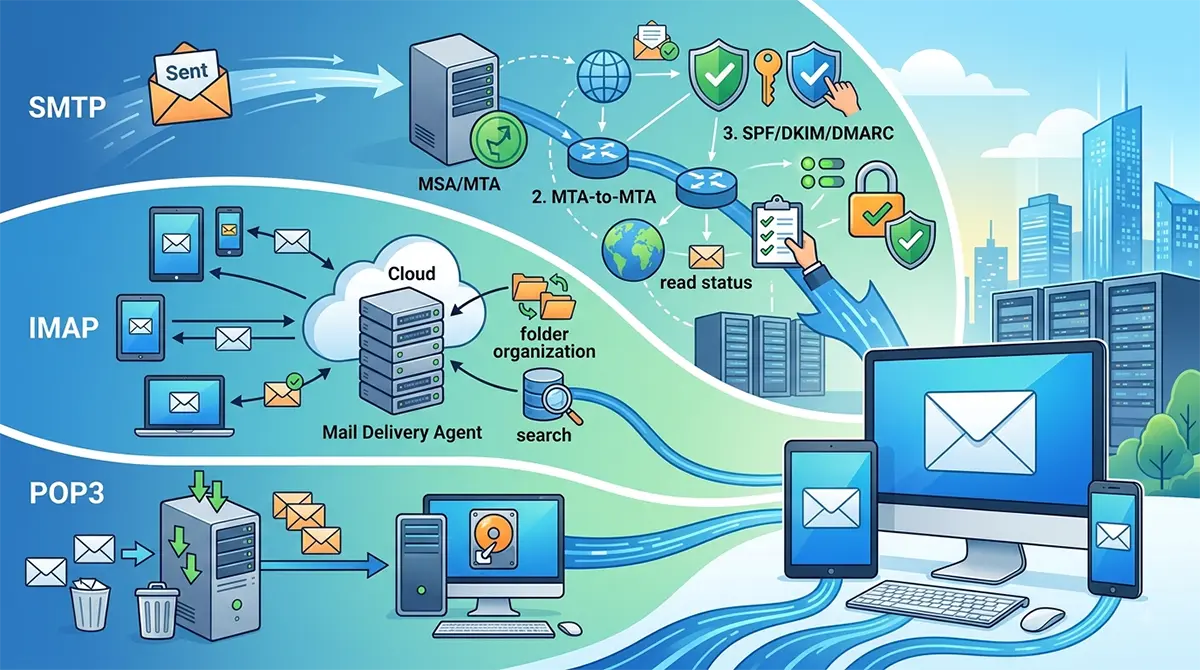
Email remains the undisputed backbone of global corporate communication, facilitating trillions of interactions, contractual agreements, financial transactions, and confidential exchanges every year. Yet, despite its central role in modern business operations, the fundamental architecture supporting email was designed in an era when trust was implicit and security was an afterthought. The Simple Mail Transfer Protocol, first established decades ago, lacks native authentication mechanisms to verify the identity of a sender. This architectural vulnerability has allowed cybercriminals to exploit email systems with alarming ease, using domain spoofing, business email compromise, phishing campaigns, and executive impersonation to deceive organizations, employees, and customers alike.
As organizations scale their digital footprints, the risk of unauthorized domain usage amplifies exponentially. Attackers do not need to breach a network perimeter to cause catastrophic financial and reputational harm; they simply need to forge a domain name in an email header. When a malicious actor sends a perfectly crafted email appearing to originate from a trusted domain, recipient email servers have no inherent way to distinguish the counterfeit from the legitimate transmission. This absence of verification opens the door to fraudulent wire transfers, credential theft, and severe regulatory non-compliance. Addressing this systemic flaw requires a structural mechanism that authenticates senders, enforces strict operational standards, and grants domain owners complete visibility into their email ecosystem.
Understanding the Triad of Email Authentication Standards
To build an impenetrable defense against domain spoofing, modern enterprise architecture relies on a specialized triad of protocols: Sender Policy Framework, DomainKeys Identified Mail, and Domain-based Message Authentication, Reporting, and Conformance. Each protocol addresses a distinct aspect of email integrity, and together they form a comprehensive validation framework.
Sender Policy Framework operates as a public directory of authorized senders. By publishing a specific record within the Domain Name System, a domain owner explicitly declares which IP addresses and mail servers are permitted to send emails on behalf of that domain. When a receiving server gets an incoming message, it checks the publishing domain DNS record to verify whether the sending IP address matches the approved list. While SPF provides an essential first layer of filtering, it suffers from inherent structural limitations. It fails to protect emails that are forwarded through intermediate nodes, and crucially, it only validates the Return-Path address rather than the visual address displayed to the recipient in the Header From line.
DomainKeys Identified Mail introduces cryptographic verification to overcome the limitations of IP-based validation. When an email is dispatched, the outbound mail server attaches a digital signature to the message header, generated using a private key. The receiving server fetches the corresponding public key from the sender DNS records to verify the authenticity of the signature and confirm that the body content and critical headers were not altered in transit. DKIM provides powerful tamper-evident verification, ensuring that the message content remains intact. However, DKIM alone does not mandate how a receiving server should handle an unauthenticated or altered email, nor does it prevent unauthorized senders from omitting a signature altogether.
This gap is precisely where DMARC becomes indispensable. Acting as the ultimate authority, DMARC links the verification mechanisms of both SPF and DKIM directly to the visible Header From address that human users inspect. More importantly, DMARC allows domain owners to publish explicit policy instructions telling receiving email systems exactly how to treat messages that fail SPF or DKIM checks. Without DMARC, SPF and DKIM operate as passive diagnostics; with DMARC, they transform into active, enforceable policy rules.
Deciphering the Strategic Value of DMARC Enforcement
Achieving full DMARC enforcement represents a monumental shift from defensive vulnerability to proactive oversight. Without DMARC enforcement, an organization remains completely blind to who is sending emails using its brand identity. Unscrupulous actors, unauthorized cloud service providers, shadow IT departments, and third-party vendors may all be dispatching messages using the corporate domain without centralized security controls.
Implementing a strict DMARC regime yields several transformative business and security benefits:
-
Absolute Prevention of Direct Domain Spoofing: By configuring a strict reject policy, malicious emails originating from unauthorized IP addresses or lacking valid cryptographic signatures are blocked at the perimeter of recipient mailboxes before they can inflict damage.
-
Enhanced Email Deliverability and Inbox Placement: Global Internet Service Providers and enterprise email platforms actively penalize domains with poor or missing authentication. Proper DMARC enforcement signals to receiving networks that an organization maintains rigorous security controls, significantly increasing inbox placement rates for legitimate communications.
-
Global Visibility Across Email Ecosystems: DMARC introduces a standardized feedback loop. Receiving servers around the world send detailed XML aggregate and forensic reports back to the domain owner, revealing every server across the globe attempting to send mail on behalf of the domain.
-
Protection of Brand Equity and Customer Trust: A single successful phishing attack executed under a corporate domain can destroy customer confidence and trigger severe media scrutiny. DMARC safeguards brand reputation by ensuring that recipients only see genuine communications.
-
Compliance with Evolving Global Standards: Major email infrastructure providers, including Google and Yahoo, now mandate valid DMARC records for high-volume senders. Operating without DMARC enforcement increasingly results in legitimate business emails being outright rejected or routed directly to spam folders.
Navigating the Three Stages of DMARC Policy Progression
Transitioning an enterprise to maximum domain protection is not an instantaneous toggle; it is a methodical journey designed to eliminate risk without interrupting legitimate operational email flows. The DMARC specification provides three policy settings that dictate how receiving servers should treat unauthenticated messages: none, quarantine, and reject.
-
The Discovery and Monitoring Phase (Policy: p=none)The initial stage of implementation requires deploying a DMARC policy set to p=none. In this state, the protocol operates purely in evaluation mode. Receiving mail servers execute SPF and DKIM checks, process incoming messages normally regardless of pass or fail results, and generate structured XML telemetry back to the designated reporting addresses.
Deploying p=none allows security teams to map their entire email ecosystem comprehensively. During this stage, organizations identify all legitimate outbound mail streams, including primary mail servers, marketing platforms, customer relationship management systems, enterprise resource planning tools, HR platforms, and external vendor integrations. Attempting to enforce strict policies without completing a thorough discovery phase invariably leads to critical operational disruptions, as legitimate business applications sending automated emails may be blocked unintentionally.
-
The Testing and Mitigation Phase (Policy: p=quarantine)Once all legitimate mail sources have been identified, aligned with proper SPF records, and configured with valid DKIM signatures, the domain transitions to p=quarantine. Under this policy, receiving mail servers are instructed to treat unauthenticated emails with extreme suspicion. Messages that fail both SPF and DKIM alignment are redirected to the recipient spam or junk folder, or held in server quarantine for administrative review.
The quarantine phase acts as a vital safety buffer. It exposes any misconfigured legitimate mail streams that were missed during the monitoring phase without causing outright loss of communication. Security teams typically enforce quarantine incrementally, utilizing the pct tag within the DMARC record to apply the policy to a percentage of total mail flow, gradually ramping up from 10 percent to 100 percent as confidence grows.
-
The Maximum Security Phase (Policy: p=reject)The pinnacle of domain security is achieved with the deployment of p=reject at 100 percent coverage. Under this strict enforcement policy, any email claiming to originate from the organization domain that fails SPF and DKIM alignment is rejected outright by the receiving server. The fraudulent message is dropped at the edge and never enters the recipient mailbox or spam folder.
Reaching p=reject completely eliminates direct domain spoofing for the configured domain. It assures stakeholders, partners, and clients that any email appearing in their inbox from that domain has been verified beyond doubt.
Mastering Identifier Alignment: The Key to True DMARC Success
A critical concept that frequently causes confusion during DMARC deployment is identifier alignment. It is entirely possible for a message to pass both SPF and DKIM technical checks individually and yet still fail DMARC verification if alignment is not achieved.
In standard email architecture, two distinct sender addresses exist in every transmission: the Envelope From address, also known as the Return-Path or Mail From, which is used by mail servers to route bounce messages; and the Header From address, which is displayed to the human user in their email client interface. Phishing campaigns often exploit this dual-address structure by using a domain they control for the Envelope From address to pass SPF checks, while inserting a targeted corporate domain in the Header From line to trick the user.
DMARC neutralizes this attack vector by requiring alignment between the domain visible in the Header From line and the domains verified by SPF and DKIM:
-
SPF Alignment: To achieve SPF alignment, the domain present in the Header From line must match or belong to the same organizational domain as the Envelope From address validated during the SPF lookup.
-
DKIM Alignment: To achieve DKIM alignment, the domain specified in the d= tag of the valid cryptographic DKIM signature must match or share the same organizational domain as the Header From address.
DMARC allows administrators to configure alignment modes as either relaxed or strict. Under relaxed alignment, subdomains are permitted to match the main organizational domain. Under strict alignment, exact domain matching is enforced without exception. Proper configuration of identifier alignment is essential to ensure that legitimate third-party service providers can successfully send authorized emails on behalf of the enterprise without triggering policy violations.
Overcoming Complex Challenges in Enterprise DMARC Deployment
While the concept of DMARC is straightforward, executing a successful rollout across a large enterprise presents several operational and technical hurdles. Understanding these potential pitfalls allows organizations to proactively design robust deployment strategies.
Managing Third-Party Cloud Services and Shadow IT
Modern enterprises rely heavily on dozens of SaaS platforms to execute daily operations, including email marketing suites, ticketing systems, transactional message gateways, and recruitment software. Uncovering every third-party service sending mail on behalf of an enterprise is often the most time-consuming phase of DMARC implementation. Security teams must coordinate with marketing, sales, human resources, and IT departments to audit all active tools, configure customized DKIM keys, and align Return-Path addresses appropriately.
Navigating the Ten DNS Lookup Limit of SPF
The original SPF specification imposes a strict technical limit: a receiving mail server must not perform more than ten DNS lookups while evaluating an SPF record. Exceeding this limit results in a PermError, which causes SPF checks to fail and potentially breaks DMARC alignment. As organizations integrate multiple cloud vendors, their aggregate list of IP blocks and included SPF mechanisms quickly exceeds this threshold. Overcoming this restriction requires implementing advanced SPF flattening techniques or dynamic SPF solutions that condense complex inclusion trees into compact, optimized IP lists.
Decoding and Analyzing Large Volumes of Raw XML Telemetry
During the monitoring phase, receiving servers generate thousands of XML files detailing email traffic patterns. Parsing raw XML reports manually is practically impossible for enterprise IT teams. To extract actionable intelligence from this flood of data, organizations must utilize specialized DMARC reporting platforms that ingest, aggregate, and visualize performance metrics, identifying rogue senders, misconfigured servers, and active spoofing attempts through intuitive dashboards.
Handling Email Forwarding and Intermediate Modification
When a legitimate email is automatically forwarded by a recipient server, intermediate nodes often rewrite the envelope headers or alter the message structure. These modifications frequently break traditional SPF validation and can invalidate DKIM signatures if footers or tracking links are appended. DMARC implementations must account for these routing realities by ensuring robust DKIM signing practices, as DKIM signatures survive standard email forwarding intact whereas SPF checks typically fail.
The Role of Strategic IT Consulting in Accelerating DMARC Adoption
Given the intricate balance between strict security enforcement and operational continuity, many organizations seek external technical leadership to guide their email authentication journeys. Securing specialized expertise ensures that domain protection policies are deployed seamlessly without threatening critical revenue-generating communications or operational workflows.
When organizations undertake comprehensive IT transformations, domain security must be integrated directly into broader enterprise governance, cloud architecture, and cybersecurity frameworks. For instance, businesses expanding operations across dynamic global markets rely on specialized advisory services to optimize their digital infrastructure. Engaging in Technology optimization consulting in UAE enables regional and multinational enterprises to align their email authentication protocols with international cybersecurity standards while optimizing cloud service delivery and vendor communication channels.
Strategic advisors bring deep expertise in auditing complex email networks, managing SPF record compression, standardizing DKIM key rotation schedules, and establishing automated incident response workflows for spoofing alerts. By leveraging dedicated consulting resources, organizations can compress the timeline required to progress from initial monitoring to full p=reject enforcement while insulating internal teams from administrative overhead.
Best Practices for Maintaining DMARC Policy Excellence
Achieving p=reject is a momentous accomplishment, but domain protection is an ongoing operational discipline rather than a one-time project. As business operations evolve, new cloud applications are onboarded, vendors are changed, and digital strategies shift. To maintain maximum protection over time, security teams should adhere to a structured set of operational best practices:
-
Establish Continuous Automated Telemetry Monitoring: Maintain active DMARC report parsing to instantly detect unauthorized senders, expiring vendor DKIM keys, or fresh domain spoofing campaigns targeting brand infrastructure.
-
Enforce Strict Change Management for Outbound Mail Services: Require every business unit to submit new third-party email tools through formal security review prior to deployment, ensuring SPF and DKIM alignment is established before going live.
-
Implement Cryptographic DKIM Key Rotation: Regularly rotate DKIM private and public key pairs at scheduled intervals to minimize the risk of key compromise or unauthorized access.
-
Secure Defensive and Inactive Domains: Do not limit DMARC deployment to primary active domains. Parked, defensive, and non-sending domains are prime targets for malicious actors because they are rarely monitored. Publish explicit p=reject policies, empty SPF records, and invalid DKIM configurations for all inactive domains to prevent unauthorized exploitation.
-
Adopt Complementary Security Protocols: Pair DMARC enforcement with Brand Indicators for Message Identification to display verified logo graphics directly in recipient inboxes, further augmenting brand authenticity and visual verification.
-
Train Helpdesk and Incident Response Teams: Ensure internal IT helpdesks and SOC analysts understand DMARC error reporting and possess clear protocols to resolve delivery issues experienced by internal or external senders.
Securing the Future of Digital Communication
The cyber threat landscape will continue to evolve, but the vulnerability of unauthenticated domain spoofing is a problem that modern enterprise security can definitively solve. DMARC stands as the gold standard for domain protection, bridging the historical gaps in email architecture and providing domain owners with absolute control over their identity in the digital world.
Moving from passive monitoring to active p=reject enforcement requires meticulous planning, precise technical alignment, and continuous oversight. However, the operational rewards are immeasurable: complete defense against domain impersonation, restored trust with business partners and customers, optimized email deliverability, and full compliance with global email security standards. By prioritizing DMARC enforcement, forward-thinking organizations eliminate one of the most pervasive attack vectors in cybersecurity, ensuring that every message sent under their name remains trusted, authentic, and secure.