
The Evolution of Cloud Infrastructure and the Rise of Infrastructure as Code
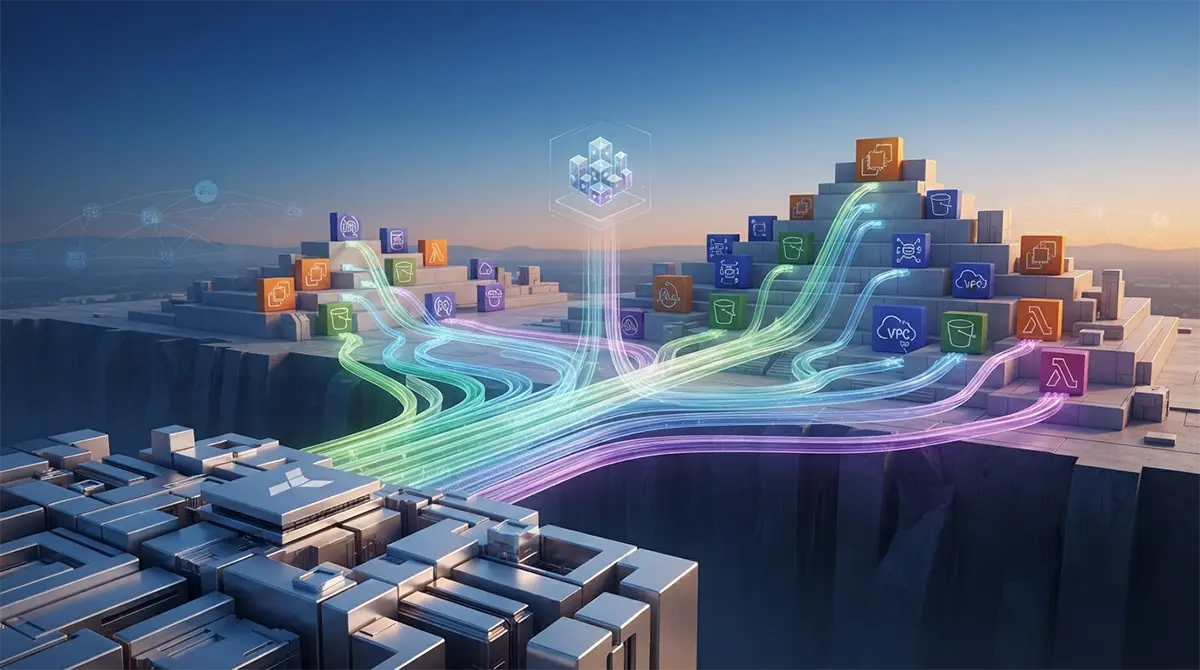
The journey of managing enterprise infrastructure has undergone a massive paradigm shift over the last decade. Gone are the days of manual server provisioning, where system administrators logged into consoles or physical racks to configure operating systems, network interfaces, and storage volumes by hand. This manual approach, often affectionately or wryly referred to as “clickOps,” introduced immense human error, configuration drift, and an inability to reproduce exact environments reliably across development, staging, and production landscapes. As organizations scaled their digital footprints onto cloud providers like Amazon Web Services (AWS), the sheer volume of resources—virtual private clouds, subnets, auto-scaling groups, security groups, and databases rendered manual management entirely unsustainable.
To solve this complexity, the industry embraced Infrastructure as Code (IaC). By treating infrastructure definitions as code artifacts stored in version control systems, engineering teams gained the ability to apply software engineering best practices to infrastructure operations. Code review processes, automated testing, continuous integration, and version history became standard operating procedure for provisioning cloud environments. Among the various tools that emerged in the IaC ecosystem, HashiCorp’s Terraform established itself as a dominant force. Its declarative language, cloud-agnostic approach, and robust provider ecosystem made it the go-to choice for organizations seeking to manage complex, multi-service architectures at enterprise scale.
Managing Terraform effectively at scale, however, introduces its own unique set of engineering challenges. When an infrastructure codebase grows from a few dozen resources to tens of thousands of resources spanning multiple AWS accounts, regions, and business units, a poorly structured Terraform implementation can quickly become an administrative bottleneck. Code duplication, tangled state files, slow execution times, and coordination conflicts among developers can derail productivity. Mastering AWS infrastructure management at scale requires rigorous architectural planning, disciplined state management, modular design patterns, robust CI/CD integration, and strict security and governance controls.
Architectural Foundations: Designing a Scalable Terraform Structure
Scaling Terraform begins long before the first terraform apply command is ever executed; it begins with repository design and directory organization. A monolithic repository where every AWS resource for an entire enterprise lives in a single directory or a single state file is a recipe for disaster. As the resource count grows, plan and apply times skyrocket, blast radiuses expand dangerously, and any syntax error or state lock blocks the entire engineering organization.
To build a resilient foundation, organizations must adopt a modular, decoupled repository strategy. This typically involves separating infrastructure code based on lifecycle, blast radius, and organizational ownership. Common structural patterns include separating foundational networking and shared services from application-specific workloads. For instance, foundational components such as Virtual Private Clouds (VPCs), transit gateways, Route 53 hosted zones, and shared IAM roles change infrequently and have a massive blast radius. These should be housed in their own dedicated repository and managed by a centralized cloud platform or infrastructure team.
In contrast, application workloads such as microservices running on Amazon ECS or Amazon EKS, paired with Amazon RDS databases and Application Load Balancers—change frequently and belong closer to the product engineering teams responsible for them. By segregating these layers, teams can achieve independent deployment cycles without risking foundational network configurations. Furthermore, utilizing dedicated directories for each environment (such as development, staging, and production) or leveraging Terraform workspaces effectively ensures that changes can be safely promoted through a structured release pipeline. However, for large-scale enterprise deployments, directory-based separation using distinct configuration folders per environment is generally preferred over workspaces, as it provides clearer visibility, avoids accidental state contamination, and allows for environment-specific variable tuning without complex conditional logic.
Mastering State Management at Scale
At the heart of Terraform lies the state file a JSON-formatted record that maps your real-world AWS resources to your declarative configuration files. Managing this state file securely, efficiently, and reliably is the single most critical factor in running Terraform at scale. When multiple engineers or automated CI/CD pipelines attempt to modify infrastructure concurrently, unmanaged local state files will inevitably lead to race conditions, state corruption, and catastrophic drift.
For enterprise-grade AWS environments, remote state storage is non-negotiable. The industry-standard pattern involves storing the Terraform state file in an encrypted Amazon S3 bucket, paired with an Amazon DynamoDB table for state locking. This configuration prevents simultaneous writes, ensuring that two pipelines or engineers cannot execute conflicting updates at the exact same time.
As infrastructure scales into thousands of resources, even a centralized S3 backend can experience performance bottlenecks if the state file becomes excessively large. A monolithic state file increases the time required for terraform plan to refresh resource states against the AWS API, leading to sluggish feedback loops. To mitigate this, engineers must practice state file splitting. By breaking down large infrastructures into smaller, logically bound domains such as a state file for storage, a state file for computing, and a state file for database clusters teams can dramatically reduce plan times and minimize blast radiuses.
Cross-state dependencies between these split configurations can be securely managed using the terraform_remote_state data source or by explicitly passing outputs from foundational stacks as inputs to downstream application stacks. Additionally, enforcing strict encryption of state files at rest using AWS KMS (Key Management Service) and restricting S3 bucket access policies to absolute minimum privileges ensures that sensitive infrastructure metadata, which often includes database connection strings, passwords, and internal IP addresses, remains secure against unauthorized access.
Advanced Module Design and the DRY Principle
Code duplication is an enemy of maintainability in software engineering, and Infrastructure as Code is no exception. When managing AWS infrastructure across multiple accounts or business units, teams often fall into the trap of copy-pasting Terraform configuration blocks for standard architectural patterns such as a standard three-tier web application stack or a secured S3 logging bucket. This anti-pattern leads to immense technical debt, as security patches or configuration updates must be manually applied across dozens of disparate files.
The solution lies in advanced module design adhering to the DRY (Don’t Repeat Yourself) principle. Terraform modules allow engineers to encapsulate complex sets of resources into reusable, version-controlled building blocks. A well-designed module abstracts away the tedious boilerplate code while exposing a clean, well-documented interface of input variables and output attributes.
When designing modules for scale, adhere to the following best practices:
-
Single Responsibility Principle: Ensure each module focuses on a specific architectural component, such as an ECS service with an associated ALB, rather than trying to build a monolithic module that attempts to provision an entire cloud environment.
-
Strict Validation and Documentation: Use variable validation blocks to catch misconfigurations early during the planning phase, ensuring that developers supply naming conventions, instance types, and tagging schemes that comply with enterprise standards.
-
Module Versioning: Never reference modules directly from a mutable branch in a remote Git repository for production workloads. Instead, leverage a private Terraform module registry or tag Git repositories with semantic versioning (SemVer) to ensure immutable, predictable infrastructure deployments.
By centralizing infrastructure patterns into versioned modules, platform engineering teams can empower product developers to spin up secure, compliant AWS environments rapidly without needing to become deep experts in every underlying AWS networking or security nuance.
Integrating CI/CD Pipelines for Automated Deployments
Relying on local developer laptops to execute terraform apply against production AWS environments is a dangerous enterprise anti-pattern. Local execution exposes the organization to risks such as lost state files, expired IAM session tokens, unvetted code changes, and a lack of auditability. To achieve true scalability and reliability, Terraform must be fully integrated into a robust Continuous Integration and Continuous Deployment (CI/CD) pipeline.
A mature Terraform CI/CD workflow typically follows a pull request model:
-
Code Commit and Pull Request: An engineer creates a branch, modifies the infrastructure code, and opens a pull request against the main branch.
-
Automated Linting and Validation: The CI system runs formatting checks (
terraform fmt), syntax validations (terraform validate), and static code analysis to catch syntax errors and stylistic inconsistencies. -
Automated Planning: The CI system executes
terraform planand automatically posts the execution plan as a comment directly on the pull request. This allows reviewers to inspect precisely which AWS resources will be created, modified, or destroyed. -
Automated Policy Enforcement: Security and compliance scanning tools analyze the plan output to verify adherence to organizational governance standards.
-
Merge and Apply: Upon approval and merging into the main branch, the CD pipeline executes
terraform applyautomatically in the target AWS environment, ensuring that the code repository remains the absolute single source of truth.
Implementing this pipeline requires careful handling of AWS credentials. Instead of storing long-lived IAM user secret keys in CI/CD environment variables, modern setups utilize OpenID Connect (OIDC) federation between the CI/CD platform (such as GitHub Actions or GitLab CI) and AWS IAM. This allows pipelines to assume temporary, highly restricted IAM roles securely for the duration of the execution, dramatically reducing the security attack surface.
Policy as Code and Automated Security Guardrails
As infrastructure scales, the velocity of deployments increases. While this agility is desirable, it can easily lead to accidental security misconfigurations such as an S3 bucket configured with public read access, an RDS database exposed directly to the public internet, or security groups allowing unrestricted ingress on port 22. Relying solely on manual code reviews to catch these vulnerabilities is insufficient; human reviewers suffer from fatigue and can easily miss subtle misconfigurations buried within hundreds of lines of JSON and HCL.
To solve this, modern enterprises implement “Policy as Code” using tools integrated directly into the Terraform workflow, such as HashiCorp Sentinel, Open Policy Agent (OPA) via Conftest, or Checkov. These tools evaluate the JSON representation of the terraform plan before any resources are actually provisioned against AWS.
Policy as Code allows security teams to codify organizational compliance mandates and regulatory frameworks into automated guardrails. For example, a policy can be written to automatically reject any Terraform plan that attempts to create an unencrypted EBS volume, or one that lacks required cost-allocation tags. By shifting security left into the planning phase, developers receive immediate, actionable feedback on compliance violations before code ever reaches production, eliminating costly remediation cycles and maintaining a secure posture continuously.
Cost Management, Governance, and Lifecycle Policies
Cloud infrastructure at scale introduces significant financial exposure. Without strict governance, orphaned resources, oversized EC2 instances, and unoptimized storage tiers can lead to runaway cloud bills that drain enterprise budgets. Terraform plays a pivotal role in enforcing financial accountability and operational governance.
One of the foundational governance practices in a Terraform-managed environment is the enforcement of mandatory tagging policies. Every resource provisioned through Terraform should automatically inherit standardized tags such as Environment, Owner, CostCenter, and Project through provider-level default tags or module abstractions. These tags enable granular cost allocation and tracking within AWS Cost Explorer.
To catch financial surprises before they hit production, teams increasingly integrate cost-estimation tools into their CI/CD pipelines. Tools like Infracost analyze the terraform plan and output an estimated cost delta directly onto the pull request, informing reviewers whether a proposed architectural change will increase monthly cloud spend by ten dollars or ten thousand dollars.
Furthermore, lifecycle blocks within Terraform (lifecycle { prevent_destroy = true } or ignore_changes) provide vital protection against accidental destruction of critical stateful resources, such as production databases or primary encryption keys. Balancing automation with these safety mechanisms ensures that teams can move fast without breaking mission-critical data layers.
Multi-Account Strategies, Global Expansion, and Regional Agility
Enterprise AWS architectures rarely exist within a single account. Security isolation, blast-radius containment, and billing segregation drive organizations toward multi-account strategies orchestrated through AWS Organizations, AWS Control Tower, and Landing Zones. Managing hundreds of distinct AWS accounts manually is practically impossible, making Terraform an essential tool for multi-account orchestration.
When scaling Terraform across multiple accounts, engineers must design provider configurations that can assume cross-account IAM roles seamlessly. Using dynamic provider aliasing, a single Terraform codebase can orchestrate resources across dozens of AWS regions and accounts simultaneously. This capability becomes especially powerful when deploying globally distributed architectures, such as multi-region active-active web applications backed by global Aurora database clusters and Route 53 latency-based routing.
For organizations navigating complex geographic expansions or seeking specialized engineering support for regional compliance frameworks, partnering with external providers who specialize in cloud migrations and optimization can bridge critical skill gaps. For instance, enterprises expanding their digital operations into the Middle East often collaborate with specialized agencies offering DevOps Services in Dubai to ensure their Terraform modules comply with local data residency laws and high-availability regional requirements.
Similarly, as organizations scale their internal platform engineering teams to manage these sprawling multi-account AWS landscapes, talent acquisition and compensation benchmarking become critical considerations. Understanding regional market rates, such as evaluating a competitive Linux dubai salary for senior systems engineers and infrastructure automation specialists, ensures that organizations can attract and retain the top-tier talent required to maintain complex, resilient Terraform codebases.
Conclusion: The Future of Scalable Infrastructure Management
Managing AWS infrastructure at scale with Terraform is a journey that transcends simple scripting; it is a discipline rooted in software engineering rigor, architectural foresight, and relentless automation. By moving away from manual provisioning and embracing robust directory structures, split remote states, version-controlled modular design, automated CI/CD pipelines, and Policy as Code guardrails, organizations can tame the inherent complexity of cloud computing.
As the cloud-native landscape continues to evolve with ongoing community discussions surrounding ecosystem forks like OpenTofu, the growing maturity of native cloud control planes, and increasingly sophisticated AI-assisted coding tools the foundational principles of declarative infrastructure management remain rock solid. Treating infrastructure as code, maintaining strict immutability, and enforcing automated validation are the cornerstones of operational excellence. Organizations that master these practices will unlock unprecedented agility, security, and financial predictability, empowering their engineering teams to focus on delivering high-value business features rather than fighting infrastructure fires.