

In the hyper-competitive digital marketplace, organic visibility alone is rarely enough to guarantee business survival. While search engine optimization and organic social media content remain critical long-term investments, they require months of consistent effort before yielding meaningful results. Pay-per-click advertising, universally known as PPC, serves as the ultimate growth engine for businesses seeking fast, scalable, and measurable results.
Despite its popularity, PPC can often feel like a complex labyrinth of acronyms, shifting algorithms, and opaque bidding systems. Business owners and marketing professionals frequently waste thousands of dollars on ill-prepared campaigns simply because they do not fully understand how the underlying engines operate. This guide aims to clear away the confusion surrounding pay-per-click advertising, offering a complete blueprint for running successful, high-ROI campaigns across modern platforms.
What is PPC Advertising and Why Does It Matter?
At its core, pay-per-click advertising is a digital marketing model where advertisers pay a fee every time a user clicks on one of their online ads. Instead of paying a flat rate to rent digital billboard space, you only pay when a user takes direct action by clicking through to your landing page. In essence, it is a way of buying visits to your site rather than attempting to earn those visits organically.
The fundamental appeal of PPC lies in its precision. Traditional advertising media such as television, radio, and print operate on a broadcast model, exposing your brand to a broad audience in the hope that a small percentage might be interested. PPC flips this model entirely by allowing you to display your message exclusively to individuals who actively demonstrate intent, interest, or specific demographic traits.
Beyond targeted audience reach, PPC provides immediate market visibility. While an search engine optimization strategy might take six to twelve months to push a new landing page to the top of search engine results, a well-structured PPC campaign can place your website at the top of search results within minutes of launching. This instant feedback loop allows businesses to quickly validate product messaging, test landing pages, and generate revenue while their organic strategies mature.
Unlocking the Mechanics: How the PPC Auction Engine Works
Many newcomers to PPC assume that the advertiser willing to spend the most money automatically gets the top position on a search engine or social platform. While budget certainly matters, modern ad platforms utilize an automated auction system designed to balance user experience with advertiser value.
Every time a user enters a search query or scrolls through a social feed, an instantaneous auction takes place behind the scenes. In the split second it takes for the web page to load, the platform evaluates every eligible ad based on three primary factors:
-
Max Bid: The maximum dollar amount you are willing to spend for a single click on a given keyword or target group.
-
Ad Quality and Relevance: An algorithmic evaluation of how relevant your ad copy and landing page are to the user’s immediate query or interests.
-
Expected Impact of Ad Assets: The additional relevance provided by ad extensions, structured snippets, site links, and images included alongside your main text.
On platforms like Google Ads, these factors combine into a metric known as Quality Score, rated on a scale from one to ten. Your Quality Score directly influences your Ad Rank, which determines your actual ad placement on the page and the true cost you pay per click.
Because Quality Score plays such a pivotal role, an advertiser with a lower bid can frequently outrank a competitor with a massive budget if their ad copy and landing page offer a vastly superior user experience. This design keeps the playing field surprisingly level, rewarding strategic optimization over raw financial muscle.
Mapping the Ecosystem: Primary PPC Platforms Explained
While search engine advertising remains the most famous form of pay-per-click, the contemporary landscape spans multiple channels, each serving distinct marketing objectives and buyer journeys.
Google Ads
Google Ads is the undisputed heavy hitter of the pay-per-click world. Handling billions of searches daily, Google provides unparalleled reach across several distinct networks:
-
Search Network: Text-based ads displayed above and below organic search engine results. These ads capture high-intent users actively searching for specific solutions.
-
Display Network: Visual banner ads positioned across millions of third-party websites, apps, and video properties. This network excels at brand awareness and visual retargeting.
-
Performance Max: An automated campaign type that leverages machine learning to serve ads across all of Google’s channels, including Maps, Gmail, YouTube, Search, and Display.
-
Shopping Campaigns: Product listing ads featuring product titles, prices, merchant names, and direct images. These are vital for e-commerce brands.
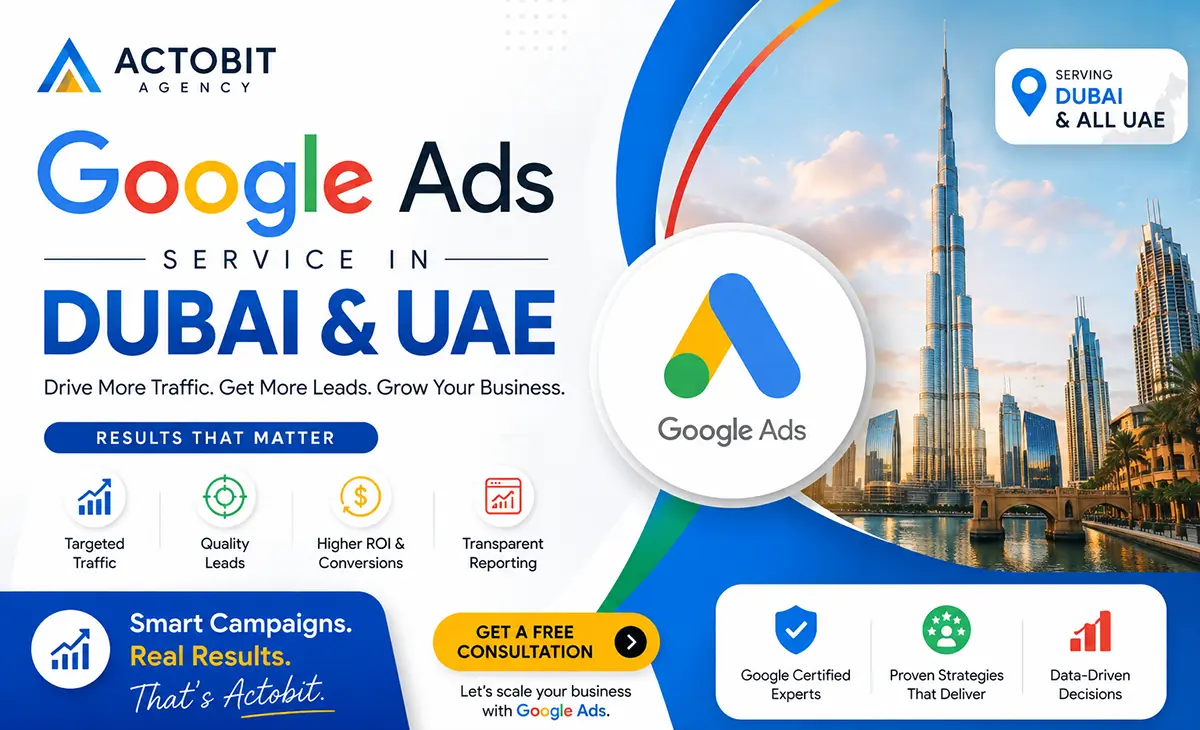
When evaluating international markets or looking into specialized agencies to manage regional campaigns, analyzing regional case studies and verified Google ads dubai reviews can offer valuable perspective on how specialized teams manage competitive local bid landscapes across search and display channels.
Microsoft Advertising
Often overlooked by marketers, Microsoft Advertising reaches millions of users across Bing, Yahoo, and AOL search engines. While Bing holds a smaller global market share than Google, its user base tends to skew older, higher income, and heavily desktop-focused. Furthermore, because competition is often lower on Bing, advertisers frequently enjoy significantly lower costs per click for comparable conversion rates.
Meta Ads (Facebook and Instagram)
Social media PPC differs fundamentally from search PPC. While search ads capture active intent, social ads generate demand by targeting users based on demographic data, personal interests, behavioral patterns, and life events. Meta Ads allows brands to target users with hyper-specific criteria, making it an extraordinary platform for visual products, consumer goods, and lead-generation offers.
Professional and Niche Networks
Depending on your industry, specialized channels may offer higher returns than broad search or consumer social channels:
-
LinkedIn Ads: The golden standard for B2B marketing, offering precision targeting by job title, company size, industry, and seniority level.
-
Amazon Ads: Essential for e-commerce sellers, putting products directly in front of shoppers who are already in a transactional mindset.
-
YouTube Ads: Video-based PPC that lets brands tell rich stories while targeting users based on search history and channel affinity.
Decoding the Master Vocabulary of PPC
Navigating the world of PPC requires familiarity with its core operational metrics. Tracking these numbers allows you to measure health, identify bottlenecks, and allocate budget with confidence.
-
CPC (Cost Per Click): The exact amount you pay each time a user clicks your advertisement.
-
CPM (Cost Per Mille): The cost paid for every one thousand impressions your ad receives, regardless of whether anyone clicks. This is commonly used for awareness campaigns.
-
CPA (Cost Per Acquisition): The total financial investment required to secure a single customer conversion, such as a purchase, form submission, or phone call.
-
CTR (Click-Through Rate): The percentage of people who saw your ad and ultimately clicked on it. Calculated by dividing total clicks by total impressions.
-
ROAS (Return on Ad Spend): A financial efficiency metric calculated by dividing the revenue generated from ads by the total ad spend. A ROAS of 4x means you earned four dollars for every dollar spent.
-
Conversion Rate: The percentage of ad clickers who successfully complete a desired action on your landing page.
-
Impression Share: The percentage of total available ad impressions your campaign captured compared to the total estimated impressions you were eligible to receive.
Step-by-Step: Building a High-Converting PPC Campaign
Creating an effective PPC campaign requires structured execution. Skipping fundamental preparation steps usually leads to wasted budgets and poor conversion rates.
Phase 1: Objective Setting and Target Definition
Before opening any ad platform, clearly define what success looks like for your business. Are you trying to generate immediate e-commerce sales, gather telephone leads for a service business, build an email list, or raise overall brand awareness?
Your goal dictates your platform selection, campaign structure, and conversion tracking parameters. Establish your maximum allowable target CPA or minimum target ROAS before spending a single dollar.
Phase 2: In-Depth Keyword and Audience Research
For search campaigns, keyword research forms the bedrock of success. You must identify what terms your potential clients use when they are ready to purchase versus when they are merely seeking free information.
Keywords generally fall into three structural match types on major platforms:
-
Exact Match: Your ad only displays when a search query precisely matches your keyword or shares the exact same user intent. This offers maximum control but lower volume.
-
Phrase Match: Your ad displays for queries that include the meaning of your keyword, allowing for minor variations while retaining core context.
-
Broad Match: Your ad displays for queries related to your keyword, including synonyms, related topics, and broader variations. This yields maximum reach but requires strict negative keyword monitoring.
Alongside positive keywords, you must compile a list of negative keywords. Negative keywords are terms for which you explicitly do not want your ads to show. For instance, if you sell premium luxury watches, adding negative keywords like free, cheap, repair, or jobs prevents your ads from serving to users who have no intention of purchasing a high-end product.
Phase 3: Writing Compelling and Compliant Ad Copy
Your ad copy has two distinct responsibilities: attracting qualified prospects and deterring unqualified clickers. Effective ad copy must clearly articulate your value proposition, incorporate key target search terms, and conclude with a decisive call to action.
To write high-performing text ads:
-
Focus on solving a specific problem or highlighting a unique transformation.
-
Include clear pricing, discounts, or compelling offers to filter out casual browsers.
-
Utilize all available ad assets, including sitelinks, callouts, and structured snippets, to maximize physical screen real estate.
-
Match the emotional tone and terminology of your target audience.
Phase 4: Landing Page Optimization
A click is merely an invitation to a conversation; the sale or lead generation takes place entirely on your landing page. Sending paid ad traffic to a generic homepage is one of the most common and expensive mistakes in digital marketing. Homepages contain too many navigation links and competing focal points, which confuses visitors and lowers conversion rates.
Instead, direct paid traffic to a dedicated, clutter-free landing page designed for a single purpose. Ensure message match between your ad copy and your landing page headline. If your ad promises a twenty percent discount on consulting services, that exact offer must be instantly visible above the fold on the landing page. Ensure fast loading speeds and prioritize mobile responsiveness, as a significant portion of paid traffic originates from mobile devices.
Advanced Optimization Tactics for Scaling Campaigns
Launching a campaign is only the beginning of the PPC lifecycle. True profitability emerges through consistent iteration, rigorous testing, and data-driven refinement over time.
Master the Art of Retargeting
The vast majority of first-time website visitors will leave without converting. Retargeting (or remarketing) allows you to place a tracking tag on your site so you can serve tailored ads to those non-converting visitors as they browse other websites, watch YouTube videos, or scroll social media.
Because retargeted users are already familiar with your brand, these campaigns consistently yield higher click-through rates and significantly lower costs per acquisition than cold traffic campaigns. Tailor your messaging based on user behavior: show specific product visual ads to visitors who abandoned a shopping cart, or offer a client testimonial video to users who spent time reading your pricing page.
Implement Systematic A/B Testing
Never rely on gut feelings when optimizing campaigns. Implement systematic split testing for every element of your marketing funnel.
Test variations of your ad headlines, value propositions, calls to action, and ad assets. On your landing pages, experiment with different form lengths, hero images, button colors, and headline copy. When conducting tests, change only one variable at a time so you can accurately isolate which modification drove the performance shift.
Utilize Bid Automation and Machine Learning Judiciously
Modern ad networks rely heavily on smart bidding algorithms powered by artificial intelligence. Strategies like Target CPA, Target ROAS, and Maximize Conversions allow platforms to adjust your bids in real time for every individual user auction, considering factors like physical location, device type, time of day, browser history, and operating system.
While automated bidding can yield exceptional results, it requires sufficient historical conversion data to function effectively. Early-stage campaigns often benefit from manual CPC bidding until the platform gathers enough conversion signals to train its algorithms accurately.
Critical Pitfalls That Drain PPC Budgets
Even experienced marketers can fall into traps that drain ad budgets with little to show in return. Awareness of these common mistakes will save you time and money.
Setting and Forgetting Campaigns
PPC is not a passive investment. Bid dynamics shift constantly, competitors adjust strategies, keyword search volumes fluctuate, and creative assets suffer from audience ad fatigue over time. A campaign left unattended for weeks will almost certainly experience declining conversion metrics and rising costs per click. Establish a routine schedule to review performance, prune underperforming terms, and refresh ad creatives.
Ignoring the Search Terms Report
On search networks, the keywords you bid on are not always identical to the actual queries users typed to trigger your ad. Regularly review your Search Terms Report to see the exact real-world phrases generating clicks. This report reveals new high-converting keyword opportunities to add to your targeting, as well as irrelevant search terms that should be immediately added to your negative keyword list.
Failing to Set Up Precise Conversion Tracking
Optimizing a PPC campaign without accurate conversion tracking is like driving with your eyes closed. You cannot determine which keywords or ad variations are generating actual revenue and which are wasting money. Before launching any campaign, verify that conversion tracking tags, custom event pixels, and offline import values are functioning correctly across all digital assets.
The Strategic Balance: Integrating PPC with Overall Marketing
While PPC offers remarkable speed and control, it functions best as part of a balanced, multi-channel marketing strategy. Relying exclusively on paid ads can create a vulnerable business model where revenue immediately halts the moment your ad budget is paused.
Combine pay-per-click advertising with search engine optimization, content marketing, email marketing, and organic social media outreach. Use PPC insights to inform your broader brand strategy: the keywords and ad headlines that generate high click-through rates and conversions in your paid campaigns can directly guide your SEO content plan and email marketing subject lines.
By viewing PPC not as a stand-alone expense, but as an integrated engine for audience research, immediate revenue generation, and scalable business expansion, you transform it from a confusing technical task into one of your most predictable growth tools. Success in pay-per-click advertising requires ongoing learning, strategic planning, continuous testing, and relentless optimization. Armed with these principles, you possess the map needed to navigate the dynamic PPC landscape and achieve sustainable growth for your organization.