


In the high-stakes arena of digital advertising, pay-per-click management often feels less like routine marketing and more like tactical warfare. Every second, millions of search queries are executed across the globe, each representing a user with a specific need, a unique question, or an urgent desire to make a purchase. For years, the conventional wisdom in pay-per-click campaign management preached a philosophy of caution. Marketers were advised to cast a wide net, bid conservatively, painstakingly optimize for low cost-per-click metrics, and gradually nurture broad audiences down a complex sales funnel.
While that conservative framework may still hold value for brand awareness or long-term engagement campaigns, it frequently fails in hyper-competitive markets where immediate revenue and market dominance are the primary objectives. Today, modern digital advertisers realize that not all traffic is created equal. A user searching for broad educational terms is in a fundamentally different mindset than a user typing a specific, purchase-ready phrase into a search bar. When a prospect enters a query that signals an immediate readiness to buy, waiting around or placing low, tentative bids is a guaranteed recipe for failure.
To win the modern pay-per-click war, advertisers must embrace a more decisive strategy. Aggressive bidding on high-intent keywords is no longer just an alternative option; it is a primary growth engine for high-performing digital marketing campaigns. By deploying maximum bidding power precisely when a searcher demonstrates clear commercial or transactional intent, brands can capture high-value market share, push competitors out of top positions, and achieve remarkable conversion rates that more than justify the upfront acquisition costs.
Understanding Search Intent and the High-Value Spectrum
To appreciate why aggressive bidding works so effectively, one must first dissect the mechanics of user intent. Search intent represents the underlying motivation behind a user query. It reveals what the person behind the screen actually wants to accomplish at the exact moment they hit enter. Generally, search queries fall into four distinct categories: informational, navigational, commercial investigation, and transactional.
Informational queries represent users in the early discovery phase. They are seeking knowledge, troubleshooting a problem, or reading guides. Navigational queries occur when users are simply trying to find a specific website or portal. Commercial investigation happens when users know what type of solution they need, but they are evaluating competing brands, reading reviews, or comparing features.
Transactional queries sit at the absolute pinnacle of value. These are the high-intent keywords. When a user searches for phrases containing clear buying signals, such as specific product model names, pricing terms, installation requests, or direct purchase modifiers, they are standing at the digital checkout counter. They have already passed through the awareness and consideration stages. They have identified their problem, selected their potential solution, and are now looking for a provider to fulfill their need immediately.
Bidding conservatively on transactional keywords is equivalent to opening a brick-and-mortar storefront and refusing to speak to customers who are standing at the register with credit cards in hand. High-intent queries represent immediate, capture-ready revenue. Because these users are ready to act, capturing their attention at the exact moment of search yields conversion rates that far surpass those of lower-intent traffic.
The Philosophy of Aggressive Bidding Mechanics
Aggressive bidding is frequently misunderstood as wasteful or reckless spending. Skeptics often assume that setting high maximum bid thresholds or using aggressive automated strategy targets inevitably destroys campaign profitability. However, true aggressive bidding is not about throwing money blindly at search engines. It is a calculated, surgically targeted deployment of capital designed to secure dominant ad placements for the most valuable search queries available.
When an ad auction takes place, search engines calculate ad rank using a combination of bid amount, ad quality, expected click-through rate, landing page experience, and ad extensions. While maintaining high quality scores is essential, the bid amount remains the single most direct lever an advertiser can pull to force their way to the top of the search engine results page.
Securing the absolute top position on a search engine results page offers massive psychological and competitive advantages. Studies consistently show that the top ad placement captures a disproportionate majority of total ad clicks. Users overwhelmingly trust top results, perceiving them as industry leaders or the most relevant solutions to their immediate problems. By bidding aggressively, you ensure that your offer is the first thing a high-intent user sees before they have a chance to evaluate alternative options or browse through organic search listings.
Furthermore, aggressive bidding disrupts the unit economics of your competitors. When you dominate top positions with strong bids and high-quality ads, competitors are forced to settle for lower positions with drastically reduced click-through rates, or they must raise their own bids to match your pace. For competitors operating with tight budgets or inefficient landing pages, this creates immense pressure, frequently forcing them to scale back their campaigns or abandon critical keyword auctions entirely.
Why High Conversions Mitigate High Costs
The primary hesitation marketers express regarding aggressive bidding is the resulting increase in cost-per-click. It is true that competing aggressively for transactional keywords will drive up your average cost per click. However, viewing campaign performance strictly through the lens of cost-per-click is a critical error that masks true profitability.
The metric that ultimately dictates business success is return on ad spend and overall customer acquisition cost. A low cost-per-click is meaningless if the resulting traffic fails to convert into paying customers. Consider a simple comparison between broad, low-intent traffic and highly targeted, high-intent traffic.
Suppose a campaign targets broad, informational keywords at a low cost of one dollar per click. If the conversion rate for this cold, low-intent traffic is only half a percent, it requires two hundred clicks to generate a single conversion. The total cost to acquire that customer equates to two hundred dollars.
Now, consider an aggressive campaign targeting high-intent keywords at a much higher cost of ten dollars per click. Because these users are actively seeking an immediate solution, the landing page conversion rate might reach fifteen or twenty percent. At a twenty percent conversion rate, it takes only five clicks to secure a paying customer. The total cost to acquire that customer is fifty dollars.
Even though the cost-per-click in the second scenario was ten times higher, the actual cost to acquire a paying customer was seventy-five percent lower. This simple economic reality lies at the core of why aggressive bidding on high-intent terms works. High conversion rates absorb higher click costs, yielding superior profitability and predictable business expansion.
Strategic Advantage in High-Stakes Regional and Niche Markets
The effectiveness of aggressive keyword bidding becomes even more pronounced when analyzing specialized industries or highly competitive geographic regions. In markets where customer lifetime value is substantial, the battle for top search positions is fierce, and victory goes to those who bid with speed and determination.
Take, for instance, enterprise technology, legal services, industrial equipment manufacturing, or regional service sectors. In these spaces, securing a single account or contract can generate thousands or even millions of dollars in net revenue. Losing a high-intent prospect to a competitor because of a conservative bid strategy represents a massive loss of potential long-term income.
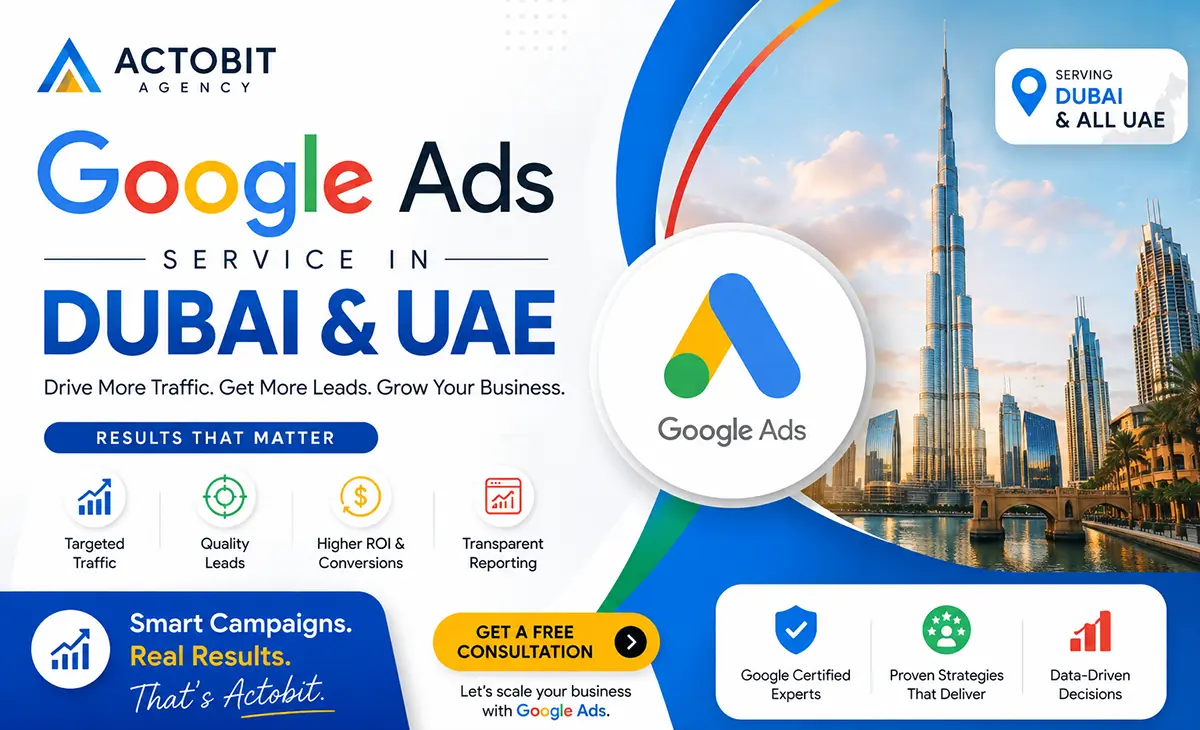
Similarly, hyper-competitive commercial centers around the globe demand uncompromising ad strategies. Advertisers managing campaigns for brands targeting dynamic business hubs, such as running high-performing Google Ads UAE campaigns, face relentless competition from global and local enterprise players alike. In fast-paced, high-value markets, consumers and corporate buyers make swift purchasing decisions online. Bidding conservatively in such environments often results in ads being buried below the fold or pushed onto second-page results where impression volume drops precipitously.
By taking an aggressive stance on transactional search terms in high-stakes markets, businesses establish immediate brand authority, capture market share before competitors can react, and build a steady pipeline of premium leads.
Building the Infrastructure for Aggressive Campaign Execution
Launching an aggressive bidding strategy without proper structural support is like driving a high-performance sports car without brakes or steering. To ensure that aggressive bids translate into profitable returns rather than wasted budget, marketers must build a robust, highly optimized campaign infrastructure.
-
Granular Account Structure: Group high-intent keywords into dedicated, highly focused ad groups or single-intent campaign structures. Separating transactional keywords from informational terms prevents budget bleed and allows for precise bid management and performance tracking.
-
Exact Match Isolation: Focus the majority of aggressive bidding power on exact match and highly controlled phrase match variations. This prevents broad match algorithms from wasting high bids on irrelevant or semi-related search queries that lack commercial intent.
-
Hyper-Relevant Ad Copy: Write direct, compelling ad copy that aligns perfectly with the transactional mindset of the searcher. Include clear calls to action, pricing information, unique selling propositions, and direct incentives to maximize click-through rates.
-
Conversion-Focused Landing Pages: Direct high-intent traffic to streamlined, fast-loading landing pages designed for immediate action. Remove unnecessary navigation menus, feature prominent lead forms or purchase buttons, and present clear social proof to eliminate friction.
-
Comprehensive Conversion Tracking: Implement flawless primary and secondary conversion tracking across all digital touchpoints. Accurate real-time data is critical for monitoring return on ad spend and feeding automated machine-learning bid algorithms.
Leveraging Modern Machine Learning and Smart Bidding
While manual bidding adjustments were once the primary method for executing aggressive strategies, modern pay-per-click platforms utilize advanced machine learning models that process thousands of real-time signals during every single auction. Combining an aggressive strategic mindset with modern automated bidding features creates a formidable marketing engine.
Smart bidding strategies, such as Target Return on Ad Spend, Target Cost Per Acquisition, or Maximize Conversions with specific guardrails, excel when paired with high-intent keyword targeting. Machine learning algorithms analyze contextual signals including device type, physical location, time of day, browser history, and operating system to predict the exact likelihood of a conversion.
When you configure automated bidding strategies aggressively on transactional keyword sets, you allow the algorithm to bid heavily on auctions with the highest probability of immediate conversion, while automatically stepping back during low-probability events. This synergy between human strategic focus and algorithmic real-time execution optimizes performance, allowing campaigns to scale revenue rapidly while maintaining target efficiency metrics.
Mitigating Risks and Managing Campaign Efficiency
Adopting an aggressive bidding model does not mean ignoring risk or abandoning budget controls. Uncontrolled spending without active governance can lead to rapid budget depletion if market conditions shift or if unqualified traffic manages to bypass keyword filters.
To maintain campaign efficiency while bidding aggressively, advertisers must establish strong defensive protocols:
-
Rigorous Negative Keyword Lists: Continuously build and expand comprehensive negative keyword libraries. Exclude terms associated with free services, educational research, job searches, DIY tutorials, and low-cost alternatives to ensure high bids are never applied to low-value queries.
-
Budget Guardrails: Set realistic daily budget caps that prevent runaway spending while providing enough runway for high-intent keywords to accumulate statistical significance and generate consistent conversions.
-
Regular Search Term Audits: Review raw search term reports on a daily or weekly basis to audit real-time query matching. Instantly eliminate irrelevant search variations that trigger high-cost clicks.
-
Monitoring Competitor Activity: Keep close watch on auction insights metrics, such as impression share, top-of-page rate, and overlap rate. Adjust aggressiveness dynamically based on shifts in competitor bidding behavior.
-
Impression Share Limits: Monitor search impression share lost due to budget versus lost due to rank. If valuable high-intent campaigns are losing impression share due to budget constraints, reallocate capital away from low-performing informational campaigns to fuel the high-intent engines.
Psychological Triggers in High-Intent Ad Messaging
Bidding aggressively gets your advertisement placed at the top of the search engine results page, but securing the click and driving the conversion depends entirely on the psychological resonance of your messaging. High-intent users are motivated by distinct emotional and practical triggers compared to early-funnel researchers.
When a searcher enters a transactional phrase, they are seeking efficiency, risk reduction, speed, and validation. Ad messaging tailored for aggressive high-intent campaigns should leverage specific psychological framework principles:
-
Urgency and Immediate Availability: Highlight rapid delivery, instant access, live availability, or limited-time terms to appeal to the user desire for fast resolution.
-
Risk Reduction and Guarantees: Reduce purchase anxiety by prominently featuring money-back guarantees, clear warranties, transparent pricing, or industry certifications directly within the headline and callout extensions.
-
Direct Value Propositions: Avoid generic corporate slogans. State clearly what product or service is offered, what key problem it solves, and why your organization is the superior choice.
-
Frictionless Calls to Action: Use action-oriented verbs that match the user search intent, such as Get an Instant Quote, Buy Now with Free Shipping, Book Your Consultation Today, or Claim Your Account.
By aligning aggressive auction placement with psychological messaging designed for immediate action, advertisers maximize click-through rates, improve ad relevance metrics, and lower effective acquisition costs.
Dominating the Digital Landscape
In the final analysis, pay-per-click advertising is an arena where timidity is rarely rewarded. While broad awareness campaigns and long-term funnel nurturing play valid supporting roles in a holistic digital strategy, immediate revenue generation requires a sharp, decisive approach.
Aggressive bidding on high-intent keywords allows businesses to seize control of their most valuable digital market segments. By identifying users who are actively standing at the point of purchase, securing top ad placements through decisive bidding power, and directing that traffic to hyper-optimized conversion environments, companies can outperform competitors, achieve superior return on investment, and drive consistent, scalable business expansion.
Winning the pay-per-click war does not require outspending every competitor across every keyword category. It requires deploying your capital with precision, courage, and speed where it matters most: right at the moment of highest commercial intent. When you master this tactical discipline, high click costs transform from a daunting obstacle into a powerful, profitable engine for sustained market dominance.