
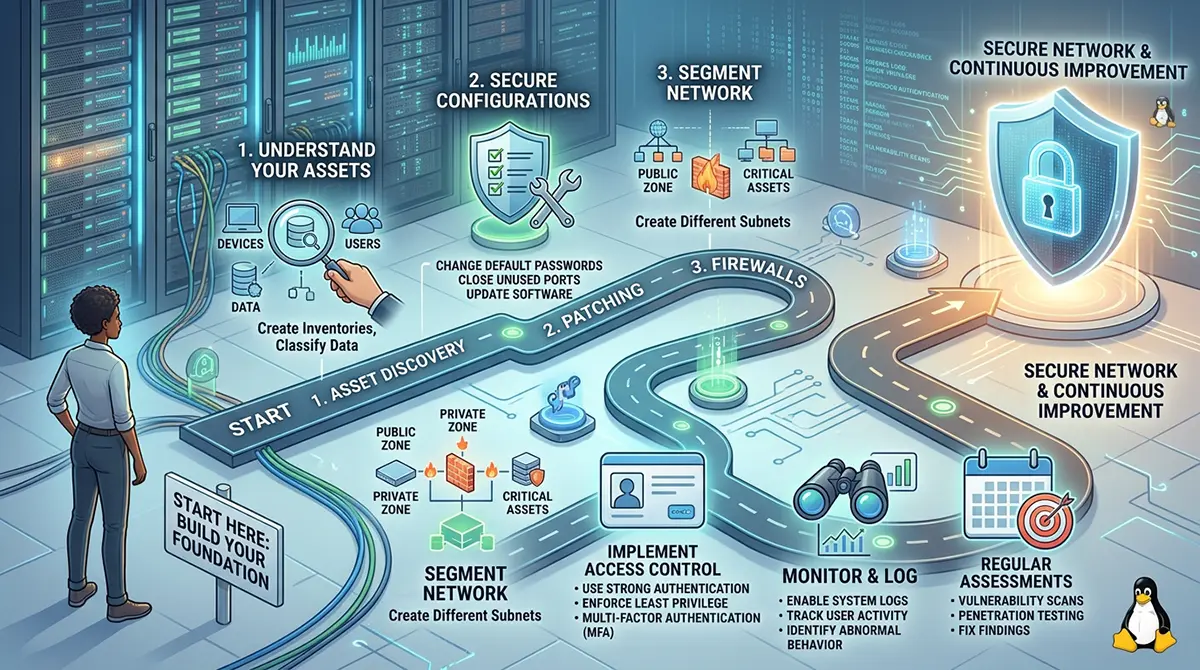



The digital world runs on networks. Every message you send, every file you download, every transaction you complete travels across interconnected systems that span the globe. Those systems face constant pressure from people who want to disrupt, steal, or manipulate the data flowing through them. Network security exists to protect those pathways. If you are reading this because you feel drawn to that protective work, you have already taken the first step. The real question is where to place your feet next.
This article walks you through a practical, realistic starting path. It does not promise overnight mastery. Network security rewards steady effort, curiosity, and a willingness to break things in controlled environments so you can learn how to fix them. The journey begins with mindset, moves through foundational knowledge, then builds practical skill through labs, tools, and deliberate practice. Along the way you will encounter recommended resources, common traps, and ways to measure progress without drowning in information.
Why Network Security Captures Attention Right Now
Organizations of every size rely on networks to operate. A small clinic stores patient records online. A mid-sized manufacturer tracks inventory across multiple sites. Global banks move money in milliseconds. Each of those networks presents surfaces that attackers probe daily. High-profile breaches make headlines, yet the quieter, ongoing attempts matter just as much. Ransomware locks systems. Data exfiltration drains intellectual property. Denial-of-service attacks silence websites during critical sales periods. The professionals who design defenses, monitor traffic, and respond when something slips through form an essential layer of modern infrastructure.
Demand for people who understand these defenses continues to grow. Entry-level roles often seek candidates who can demonstrate solid networking knowledge, comfort with common tools, and an ability to think like an adversary while remaining firmly on the defensive side. Starting now positions you to meet that demand with genuine skill rather than surface-level familiarity. The field also offers intellectual variety. One day you might analyze packet captures. The next you configure firewall rules or investigate anomalous behavior. That mix keeps the work engaging for people who enjoy both systems thinking and problem solving under pressure.
Network security is not purely technical. It involves risk assessment, communication with non-technical stakeholders, and ethical judgment. You will need to explain why a particular control matters without resorting to jargon. You will face situations where perfect security collides with usability or budget. Learning to navigate those tensions is part of becoming effective. Begin with the recognition that this discipline protects real people and real operations. That sense of purpose sustains effort when concepts feel dense or labs refuse to cooperate.
Laying the Mental Foundation Before Touching Any Tool
Before installing software or opening textbooks, clarify your motivation and set realistic expectations. Ask yourself what draws you specifically to network security rather than broader cybersecurity topics such as application security or digital forensics. Perhaps you enjoy understanding how packets move, or you want to protect the infrastructure that keeps organizations running. Write those reasons down. They become anchors when progress feels slow.
Accept that the learning curve is steep and non-linear. Early weeks often feel overwhelming because networking concepts interlock. TCP handshakes connect to routing decisions, which connect to firewall policies, which connect to intrusion detection rules. You will revisit the same ideas multiple times at increasing depth. That repetition is normal, not a sign of failure. Treat confusion as a signal that a concept needs more time rather than evidence that you lack aptitude.
Cultivate a defensive mindset from the start. Many beginners focus exclusively on offensive techniques because they seem exciting. Understanding how attacks work is valuable, yet the primary goal of network security is protection. Practice thinking about how a network can be segmented, how traffic can be inspected, and how anomalies can be detected early. Balance curiosity about vulnerabilities with equal curiosity about controls.
Finally, commit to ethical practice. Everything you learn should be applied only in environments you own or have explicit permission to test. Home labs, intentionally vulnerable virtual machines, and authorized capture-the-flag exercises provide safe spaces. Unauthorized scanning or probing of external systems crosses legal and ethical lines quickly. Build the habit of seeking permission early so it becomes automatic later.
Accelerate Your Digital Transformation
Looking to optimize your IT infrastructure, streamline business operations, and stay ahead of the competition? Discover how tailored technology advisory services uae can transform your organization. From strategic cloud adoption to cutting-edge cybersecurity, get expert guidance to drive measurable business growth in today’s fast-evolving market.
Mastering the Language of Networks First
Network security rests on networking itself. Attempting to secure systems without understanding how they communicate is like trying to protect a city without knowing its roads and bridges. Begin with the fundamental models that describe network operation.
The OSI model divides communication into seven layers, each with specific responsibilities. Physical transmission, data link framing, network addressing, transport reliability, session management, presentation formatting, and application services form a conceptual stack. You do not need to memorize every protocol at every layer immediately, yet you should understand what happens at each stage when a browser requests a webpage. The TCP/IP model offers a more practical four-layer view that aligns closely with how the internet actually functions. Spend time mapping common protocols such as Ethernet, IP, TCP, UDP, DNS, HTTP, and HTTPS onto these models.
Learn how addressing works. IPv4 remains widespread, so understand dotted decimal notation, subnet masks, and the difference between public and private ranges. Classless inter-domain routing and variable-length subnet masks appear frequently in real configurations. IPv6 is growing in importance; grasp its hexadecimal representation and the concept of larger address space. Routing decisions determine how packets travel between networks. Distance-vector and link-state protocols each have strengths. Familiarity with the ideas behind OSPF and BGP helps later when you examine routing security or route hijacking risks.
Switching and VLANs create the local fabric. Understanding MAC addresses, ARP, and how switches forward frames prevents confusion when you later configure access control lists or examine lateral movement. Wireless networking introduces additional considerations around encryption standards and authentication methods. Even if your eventual focus is wired enterprise networks, basic wireless knowledge proves useful.
Protocol behavior matters deeply. TCP’s three-way handshake, sequence numbers, and flags provide reliable delivery but also create opportunities for certain attacks. UDP’s connectionless nature suits some applications yet lacks the same reliability mechanisms. DNS translation of names to addresses is critical infrastructure; learning how recursive and authoritative servers interact prepares you for later discussions of DNS security extensions and common abuse techniques. HTTP and its encrypted counterpart HTTPS dominate application traffic. Understanding headers, methods, and status codes helps when you inspect traffic for anomalies.
Dedicate several weeks to these fundamentals before diving into security-specific material. Use free resources such as Cisco’s networking academies introductory materials, or structured courses that emphasize concepts over vendor certification. Packet Tracer or similar simulation tools let you build simple topologies and observe traffic. The goal is intuitive understanding rather than rote memorization. When you can predict what a packet will look like at different points in a path, you are ready to consider how that path might be abused or defended.
Building Operating System Comfort Alongside Networking
Networks connect systems, and those systems run operating systems. Network security work frequently involves Linux servers, Windows domain environments, and the tools that run on them. Develop basic proficiency with both major platforms.
On Linux, become comfortable at the command line. Learn to navigate the filesystem, manage processes, inspect network interfaces with tools like ip and ss, and read log files. Understand how services start, how permissions work, and how package management installs software. Many security tools and monitoring platforms prefer Linux environments. Virtual machines running distributions such as Ubuntu Server or Kali provide excellent practice grounds. Avoid treating Kali as a magic box of tools; use it primarily after you understand the underlying concepts the tools implement.
Windows remains dominant in many enterprise settings. Learn Active Directory basics, Group Policy concepts, and how Windows handles networking. PowerShell offers powerful automation and inspection capabilities. Understanding how Windows Firewall works and how event logs capture network-related activity proves useful for defensive monitoring. Dual-boot setups or additional virtual machines keep both environments available.
Cross-platform skills accelerate learning. Practice transferring files, checking connectivity, and diagnosing simple issues from both sides. The ability to move fluidly between operating systems reduces friction when you later configure monitoring agents or analyze mixed environments.
Introducing Security Concepts Without Overwhelm
Once networking and operating system basics feel familiar, introduce core security principles. Confidentiality, integrity, and availability form the classic triad. Confidentiality ensures only authorized parties see data. Integrity protects against unauthorized modification. Availability keeps systems and data reachable when needed. Network security controls map onto these goals in concrete ways.
Authentication verifies identity. Authorization determines what an authenticated identity may do. Accounting tracks actions for later review. These AAA concepts appear repeatedly in access control designs. Cryptography underpins many protections. Symmetric and asymmetric encryption, hashing, and digital signatures each serve distinct purposes. You do not need to implement cryptographic algorithms from scratch, yet understanding when to use TLS, when certificates matter, and how key management affects security is essential.
Threat modeling helps organize thinking. Identify assets worth protecting, potential adversaries, and the paths those adversaries might take. Simple frameworks encourage systematic consideration of risks rather than reactive responses to the latest headline. Common network threats include eavesdropping, spoofing, man-in-the-middle interference, denial-of-service floods, and unauthorized access through misconfigured services. Learning how each threat works prepares you to recognize the corresponding defenses.
Defense in depth remains a guiding philosophy. No single control is perfect. Layered protections such as network segmentation, firewalls, intrusion detection, endpoint controls, and monitoring create overlapping barriers. Understanding why a particular layer exists and what residual risk it leaves helps you design more resilient systems.
Hands-On Practice Turns Knowledge Into Skill
Reading alone produces limited results. Network security is a practical discipline. Create a home laboratory as soon as possible. Modern virtualization software such as VirtualBox or VMware Workstation Player runs multiple virtual machines on modest hardware. Start with a simple topology: one router or firewall virtual machine, a couple of client systems, and a server. Practice basic connectivity, then introduce intentional misconfigurations and observe the effects.
Gradually expand the lab. Add a Windows domain controller, Linux web servers, and monitoring tools. Intentionally vulnerable distributions and challenge platforms provide ready-made targets for safe practice. Capture network traffic with Wireshark and examine the packets. Learning to filter captures, follow streams, and identify protocols builds analytical muscle that textbooks cannot provide. Revisit the same capture after learning a new concept; you will notice details previously invisible.
Experiment with firewall rules. Configure simple packet filters and observe which traffic is allowed or denied. Move on to stateful inspection and application-layer awareness if your chosen platform supports them. Practice writing access control lists that implement least privilege. Break the rules deliberately and diagnose why legitimate traffic fails or unwanted traffic succeeds.
Introduce intrusion detection. Tools that inspect traffic for known signatures or behavioral anomalies reveal how monitoring works in practice. Generate benign and suspicious activity, then examine alerts. False positives teach valuable lessons about tuning. Logging and centralized collection of logs prepare you for later work with security information and event management concepts.
Document everything. Keep a lab notebook describing what you configured, what worked, what failed, and why. Screenshots of packet captures and configuration snippets become useful references. The act of explaining a setup in writing reinforces understanding and creates material you can revisit months later.
Selecting Learning Resources That Match Your Style
No single resource covers everything. Combine structured courses, official documentation, books, and interactive platforms. Introductory networking courses from reputable providers establish the base. Free materials from networking vendors often include excellent conceptual explanations even when they orient toward certification.
For security-specific learning, look for courses that emphasize defensive networking rather than pure offensive techniques. Books that walk through practical packet analysis or firewall configuration reward careful reading. Official documentation for tools you install becomes a primary reference once you move beyond introductory material. Treat vendor documentation as living material that evolves with software versions.
Interactive platforms offer guided labs and challenges. Capture-the-flag style exercises focused on networking and defensive scenarios build confidence. Many communities maintain lists of beginner-friendly challenges that avoid requiring advanced exploitation knowledge. Progress through them methodically rather than racing for points.
Podcasts, conference talks, and technical blogs keep concepts current. Listen while commuting or performing routine tasks. Choose sources that prioritize clear explanation over hype. Over time you will develop a personal filter for quality material.
Avoid the trap of collecting resources without using them. Choose one primary path for fundamentals, one for hands-on practice, and one for ongoing reading. Complete sections before jumping to the next shiny course. Depth beats breadth at the beginning.
Certifications as Milestones Rather Than Destinations
Industry certifications can structure learning and signal competence to employers. They are not magic credentials that guarantee jobs, yet they provide useful frameworks and external validation. Start with networking-focused certifications that reinforce the foundation. Entry-level security certifications introduce terminology and broad concepts without assuming deep prior experience.
Later, more specialized credentials address network security in greater depth. Choose based on the direction you want to grow rather than collecting badges. Study materials for certifications often include practice exams and lab suggestions that complement your home environment. Treat the exam as a checkpoint rather than the sole goal. The knowledge and habits developed while preparing matter more than the piece of paper.
Many professionals pursue certifications while working in related roles. If you currently hold a networking or systems administration position, leverage that experience. Security knowledge applied to familiar environments accelerates growth. If you are starting from outside the industry, certifications combined with documented lab work and personal projects create a credible portfolio.
Projects That Demonstrate Capability
Employers and collaborators look for evidence of applied skill. Build projects that solve real problems or explore interesting questions. Design a segmented home network with separate zones for trusted devices, guest access, and internet of things equipment. Implement and document the firewall rules and monitoring that protect each zone. Capture and analyze traffic during normal use and during simulated suspicious activity.
Set up a simple intrusion detection system and tune it against traffic generated in your lab. Write a short report describing the alerts, the false positives you reduced, and the residual gaps. Automate routine checks with scripts that examine interface status or parse log files for known patterns. Even modest automation demonstrates initiative.
Contribute to open discussions in forums or local groups by answering questions at your current level. Teaching a concept you recently learned solidifies it. Maintain a private repository of configuration examples and analysis notes. Over time this collection becomes a personal knowledge base and a portfolio artifact if you choose to share sanitized versions.
Navigating Common Obstacles Along the Path
Many learners stall when concepts refuse to click. When that happens, return to simpler examples. Rebuild a basic topology and re-examine traffic until the confusing piece becomes clear. Seek alternative explanations; different instructors emphasize different angles. Hands-on repetition often resolves theoretical confusion more effectively than additional reading.
Information overload is another frequent barrier. The volume of tools, frameworks, and threat reports can feel endless. Limit your active focus. Master one tool thoroughly before adding another. Schedule regular reviews of earlier material so new information connects to existing knowledge rather than floating in isolation.
Imposter feelings appear when comparing your early progress to polished professionals. Remember that experts once struggled with the same fundamentals. Measure progress against your own previous understanding rather than against external highlight reels. Small, consistent improvements compound.
Hardware limitations sometimes constrain lab ambition. Start minimal. A single physical machine running multiple lightweight virtual machines is enough for foundational work. Cloud-based temporary environments can supplement when you need larger topologies, provided you manage costs and tear them down after use.
Staying Current Without Burning Out
Network security evolves. New protocols appear, attack techniques shift, and defensive tools improve. Develop sustainable habits for staying informed. Follow a small number of high-quality sources rather than attempting to consume everything. Weekly reviews of selected blogs or summary newsletters keep awareness high without consuming entire evenings.
Participate in communities that value learning. Local meetups, online forums moderated for constructive discussion, and study groups provide both knowledge and accountability. Share your own lab experiences; the act of explaining reinforces learning and often elicits helpful feedback.
Balance depth and breadth over longer periods. After establishing a solid foundation, explore adjacent areas such as cloud networking security or wireless specifics according to interest. Periodic deeper dives into one topic prevent the sense of permanent surface-level knowledge.
Physical and mental sustainability matter. Long sessions staring at packet captures or configuration files produce diminishing returns. Schedule breaks, maintain sleep, and protect time for activities unrelated to technology. Burnout ends more learning journeys than difficult concepts do.
Mapping Early Steps to Longer Career Directions
Network security knowledge opens multiple paths. Some professionals specialize in architecture and design, creating resilient network layouts and control frameworks. Others focus on operations, monitoring traffic, responding to incidents, and maintaining defensive tooling. Consulting roles involve assessing environments and recommending improvements. Research-oriented work examines emerging threats and novel defenses.
Early learning does not lock you into one path. The same foundational skills support all of them. As you gain experience, notice which activities energize you. Designing policies, analyzing anomalies, automating responses, or explaining risks to stakeholders each appeal to different temperaments. Let those preferences guide intermediate choices of tools and deeper topics.
Entry points into paid work vary. Some begin in network administration or help-desk roles and gradually assume more security responsibility. Others enter through security operations centers that value strong networking foundations. Internships, volunteer work for nonprofits needing basic network hygiene, and personal projects all create evidence of capability. Persistence and demonstrated skill matter more than a perfectly linear resume.
Measuring Progress in Meaningful Ways
Set concrete, observable milestones rather than vague goals. After a defined period, be able to explain the path a packet takes from a client to a server and back, including addressing and transport decisions. Capture and interpret traffic for a simple web request. Configure a firewall that permits necessary services while denying others, then verify the behavior. Detect a simulated attack in lab traffic and describe the indicators.
Revisit earlier lab setups after several months and improve them with newly acquired techniques. The contrast reveals growth more clearly than any external score. Maintain a simple log of concepts studied and labs completed. Occasional reflection on that log reinforces how far you have come.
Seek feedback when possible. Share anonymized analysis or configuration approaches with more experienced practitioners who offer constructive critique. Incorporate useful suggestions and note patterns in the advice you receive.
A Realistic Timeline for the First Year
The first three months focus almost exclusively on networking fundamentals and basic operating system fluency. Build and rebuild simple topologies. Capture traffic constantly. Aim for comfort rather than perfection.
Months four through six introduce security principles and basic defensive tools. Expand the lab with intentional vulnerabilities and monitoring. Complete one structured introductory security course while continuing hands-on work.
The second half of the year deepens tool proficiency, adds more realistic scenarios, and begins portfolio projects. Explore one or two certifications if they align with your goals. Participate in community discussions and refine documentation habits.
Adjust the timeline according to available hours and prior experience. Consistency outweighs intensity. Four focused hours most weeks produce better results than occasional marathon sessions followed by long gaps.
Closing Thoughts on Beginning Well
Starting to learn network security is less about finding the single perfect resource and more about committing to a deliberate sequence of understanding, practice, and reflection. Master the language of networks. Build comfort with the systems those networks connect. Introduce security concepts through the lens of protection rather than pure exploitation. Create a laboratory where failure is safe and informative. Document what you learn. Measure progress against concrete skills. Stay ethical and sustainable.
The field needs people who combine technical competence with clear thinking and a protective orientation. Your early steps, taken carefully and consistently, prepare you to join that community. Begin with the fundamentals, keep your hands on the keyboard in controlled environments, and let curiosity guide the next question. The networks that carry so much of modern life will be stronger for the effort.