


Dubai stands proudly as a global beacon of commerce, innovation, and technological acceleration. Within this hyper-connected metropolis, enterprises operate at a breathtaking pace, driven by visionary strategic frameworks like the Dubai Economic Agenda D33 and a comprehensive, nationwide push toward artificial intelligence integration. For local businesses, digital infrastructure is no longer merely a supportive utility; it is the absolute lifeblood of daily operations, customer engagement, and long-term competitive differentiation. However, this relentless pursuit of digital excellence brings profound complexities. As organizations expand their digital footprint, scale cloud workloads, and embrace distributed workforces, their underlying network infrastructures are pushed to the absolute limit.
Building and maintaining a resilient network infrastructure in Dubai requires navigating a distinct set of regional and global obstacles. From international connectivity vulnerabilities and skyrocketing cybersecurity threats to the intricacies of hybrid cloud adoption and bandwidth-heavy artificial intelligence implementations, local organizations face multifaceted technical hurdles. Understanding these hurdles is the first critical step toward establishing sustainable, future-proof digital operations. This comprehensive exploration details the top five network infrastructure challenges confronting Dubai businesses today and outlines the strategic imperatives needed to overcome them effectively.
Mitigating International Submarine Cable Vulnerabilities and Routing Bottlenecks
Dubai’s position as a premier international business hub depends entirely on seamless cross-border connectivity. Data must flow rapidly and without interruption between local enterprises and global partners, cloud service providers, and international clients. Yet, this heavy reliance on global communication arteries exposes Dubai businesses to unique geographical vulnerabilities. International data transit relies heavily on a complex web of submarine communication cables running through critical maritime choke points, including the Red Sea region.
When these underwater cables suffer physical damage or technical disruptions due to maritime accidents, maintenance backlogs, or regional routing bottlenecks, the ripple effects are felt instantly across the United Arab Emirates business ecosystem. Internet service providers are frequently forced to reroute international traffic through alternative pathways, which inherently introduces severe network congestion, heightened latency, and sluggish application performance. For Dubai enterprises, the operational fallout manifests as delayed cloud access, interrupted video conferencing sessions, sluggish file transfers, and frustrated customers attempting to interact with digital storefronts or web applications.
To combat this challenge, modern Dubai businesses can no longer rely on a single primary internet service provider or a singular routing path. Achieving true network resilience requires a strategic shift toward multi-homing and the implementation of redundant backup internet connections. By partnering with sophisticated managed service providers, organizations can deploy automated failover systems that instantly switch traffic to secondary lines if the primary route experiences degradation. Furthermore, caching frequently accessed data closer to the source through content delivery networks and local data center colocation helps insulate daily business processes from international cable disruptions.
Empower your enterprise with seamless connectivity explore our tailored Internal Communication Network Solutions for Businesses in Dubai.
Fortifying Hyper-Interconnected Networks Against Unprecedented Cyber Threat Volumes
The digital success of Dubai’s economy is mirrored by an escalating threat landscape. Security reports highlight that the United Arab Emirates faces hundreds of thousands of cyberattacks daily, targeting critical institutions across finance, retail, logistics, and government sectors. As local organizations accelerate their digital transformations, every new cloud connection, application integration, and remote access point expands the organizational attack surface. Traditional security perimeters, which relied heavily on keeping threats outside a physical office boundary, are fundamentally obsolete in today’s hybrid work era.
Network infrastructure is the primary battleground in this ongoing cyber conflict. Modern attackers no longer rely solely on isolated malware variants. Instead, they exploit complex vulnerability chains, leveraging moderate misconfigurations, excessive user privileges, and intermediate network paths to execute stealthy lateral movements. Furthermore, the integration of artificial intelligence into cybercrime tools has drastically accelerated the speed of threat execution. The window between a vulnerability disclosure and its active exploitation has shrunk from weeks down to mere hours, leaving security teams with microscopic reaction windows to patch vulnerabilities and defend critical assets.
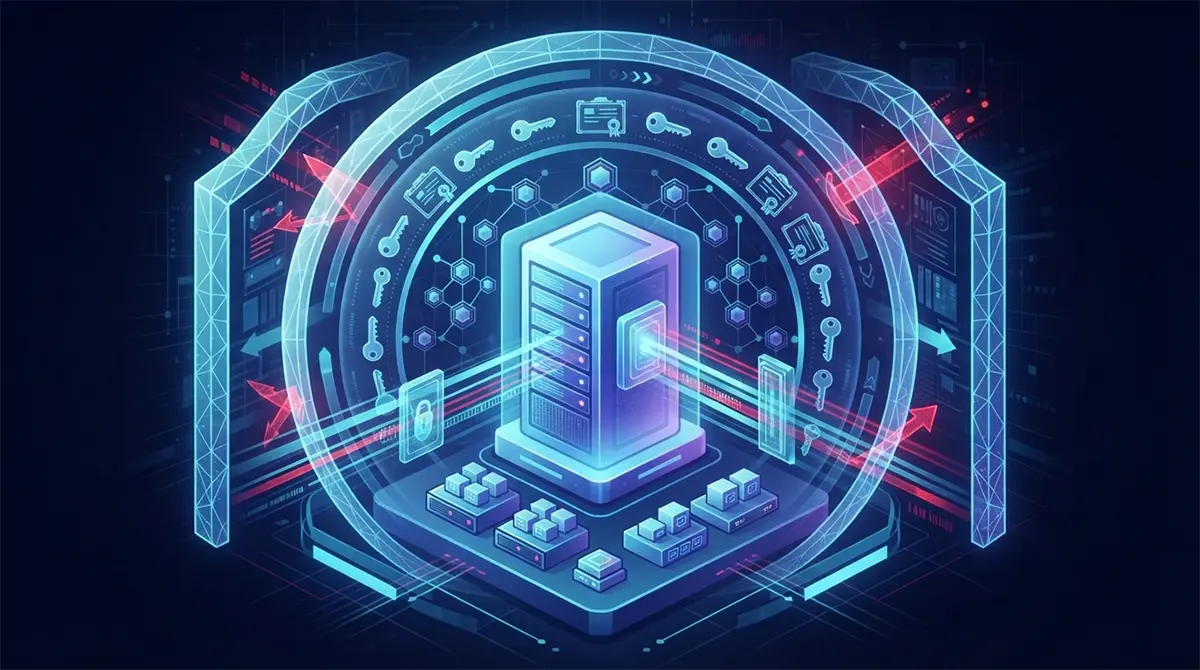
Dubai businesses must fundamentally overhaul their network security architectures to survive this high-threat environment. Transitioning to a zero-trust network access model is no longer optional. In a zero-trust framework, no user, device, or network segment is trusted by default, regardless of whether they reside inside or outside the corporate perimeter. Continuous authentication, granular micro-segmentation, and real-time behavioral monitoring must be baked directly into the network fabric. By embedding security inspection points deep within internal traffic flows, organizations can intercept lateral movements, isolate compromised endpoints, and safeguard sensitive data before a breach can cascade across the enterprise.
Bridging the Legacy-to-Cloud Integration Gap
The journey toward digital transformation often starts with high aspirations, but it quickly hits practical roadblocks when modern cloud applications collide with aging legacy hardware. Many established Dubai businesses built their operational foundations on traditional on-premises data centers, utilizing legacy routers, switches, and monolithic software applications. While these systems served their purpose well in the past, they are increasingly ill-equipped to handle the dynamic demands of modern multi-cloud and hybrid cloud environments.
Integrating cutting-edge software-as-a-service platforms, Microsoft 365 environments, and cloud databases with legacy internal networks introduces severe performance bottlenecks and compatibility dilemmas. Older network hardware often lacks the processing power, software-defined capabilities, and security features required to manage encrypted traffic loads demanded by modern cloud applications. Consequently, employees experience sluggish data retrieval, synchronization failures, and frustrating downtime that directly impacts corporate productivity. Moreover, maintaining aging infrastructure drains valuable IT budgets through soaring maintenance costs and frequent hardware failures.
Overcoming this legacy hurdle requires a structured, phased modernization strategy. Dubai enterprises must conduct comprehensive audits of their existing hardware inventory to identify critical bottlenecks and sunset obsolete equipment systematically. Transitioning toward software-defined wide area network technology provides a powerful mechanism to unify disparate environments, optimize cloud traffic routing, and simplify centralized network management. By abstracting network control from physical hardware, businesses gain the flexibility to scale bandwidth dynamically, prioritize mission-critical cloud traffic, and phase out legacy limitations without disrupting ongoing daily operations.
Scaling Network Bandwidth for the Artificial Intelligence and Internet of Things Explosion
Dubai’s aggressive adoption of emerging technologies has ushered in an era of unprecedented data generation. From smart city initiatives and municipal Internet of Things deployments to enterprise-grade artificial intelligence models, data is being created, analyzed, and transmitted at staggering volumes. For local businesses across logistics, real estate, finance, and tourism, leveraging artificial intelligence and machine learning is essential for maintaining a competitive edge. However, these advanced workloads place an extraordinary strain on existing enterprise network infrastructure.
Unlike traditional text-based communications or standard database queries, artificial intelligence models require continuous, high-speed transfer of massive datasets between edge devices, local servers, and cloud repositories. An under-provisioned network quickly becomes a severe bottleneck, starving algorithms of the data they need in real-time and rendering expensive artificial intelligence investments ineffective. Similarly, dense deployments of Internet of Things sensors generate constant telemetry data that can easily overwhelm conventional local area networks if the infrastructure lacks adequate bandwidth and intelligent traffic prioritization.
To support the demands of artificial intelligence and Internet of Things ecosystems, Dubai businesses must invest in high-capacity network architecture upgrades. This includes deploying enterprise-grade Wi-Fi standards, upgrading core switches to multi-gigabit speeds, and implementing advanced quality of service protocols to prioritize latency-sensitive workloads. Additionally, adopting edge computing principles helps alleviate core network congestion by processing data locally at the network periphery before transmitting only essential insights to the centralized cloud. By modernizing physical conduits and applying intelligent traffic management, organizations can ensure their networks keep pace with data-intensive technological advancements.
Overcoming the Shortage of Specialized IT Talent and Network Complexity
Technology is only as effective as the people who design, deploy, and maintain it. One of the most insidious and overlooked network infrastructure challenges facing Dubai businesses is the acute shortage of specialized internal information technology talent. As networking environments become exponentially more complex through the convergence of hybrid clouds, software-defined systems, zero-trust security layers, and artificial intelligence integration, the skillset required to manage them has evolved drastically.
Finding and retaining certified network architects, cloud security specialists, and infrastructure engineers in Dubai’s competitive job market is exceptionally difficult. Many internal IT departments are leanly staffed, leaving existing personnel overwhelmed by daily maintenance tasks, emergency troubleshooting, and routine patching. When networks span multiple branch offices, remote workers, and cloud environments, fragmentation sets in. Managing these complex, siloed networks manually drains organizational resources, increases the probability of human error during configurations, and prolongs downtime when technical failures occur.
To bridge this talent gap and tame network complexity, forward-thinking Dubai businesses are increasingly turning to strategic partnerships with managed service providers and investing in automation tools. Managed IT services and infrastructure maintenance agreements provide organizations with immediate access to pools of certified specialists who possess deep expertise in contemporary networking domains. Furthermore, integrating network automation and centralized management dashboards allows lean IT teams to automate routine provisioning, monitor network health in real time, and detect anomalies before they escalate into catastrophic outages. Outsourcing specialized operational burdens frees internal teams to focus on strategic growth initiatives rather than fighting daily technical fires.
Conclusion
Dubai’s status as a global economic powerhouse rests upon a foundation of relentless digital innovation. Yet, the ambition to lead the future economy brings distinct operational realities. The top five network infrastructure challenges examined here, ranging from international cable vulnerabilities and severe cybersecurity threats to legacy integration hurdles, bandwidth-hungry artificial intelligence workloads, and talent shortages, represent formidable tests for local enterprises.
Addressing these challenges requires a definitive shift away from reactive troubleshooting toward proactive, resilient infrastructure design. By diversifying connectivity routes, embracing zero-trust security frameworks, modernizing legacy systems, scaling bandwidth for advanced workloads, and leveraging expert managed services, Dubai businesses can fortify their digital foundations. In doing so, they will not only safeguard their daily operations against disruptions but also unlock the full, transformative potential of Dubai’s thriving digital future.