

The AWS Shared Responsibility Model is the foundational security framework that dictates how security and compliance are divided between Amazon Web Services and its customers. Understanding this model is critical for any organization migrating to or operating within the cloud, as misinterpreting where cloud provider responsibility ends and customer responsibility begins remains one of the primary drivers of cloud security incidents.
At its core, the Shared Responsibility Model simplifies security operational burdens by dividing tasks into two primary domains. AWS assumes responsibility for security OF the cloud, while the customer remains responsible for security IN the cloud. By taking on the maintenance, protection, and physical security of the underlying infrastructure, AWS allows organizations to offload significant operational overhead while maintaining granular control over their applications, data, and access controls.
Understanding this division of labor requires evaluating how responsibilities shift across different cloud service models, how security controls are managed, and how organizations can practically operationalize these principles to prevent costly security blind spots.
Security OF the Cloud: What Amazon Web Services Protects
Security OF the Cloud encompasses the global infrastructure components that support all services offered by AWS. This includes the hardware, software, networking, and physical facilities that run AWS Cloud services. Customers cannot directly alter or manage these lower-level assets, as AWS maintains exclusive operational control to ensure system integrity, availability, and global compliance.
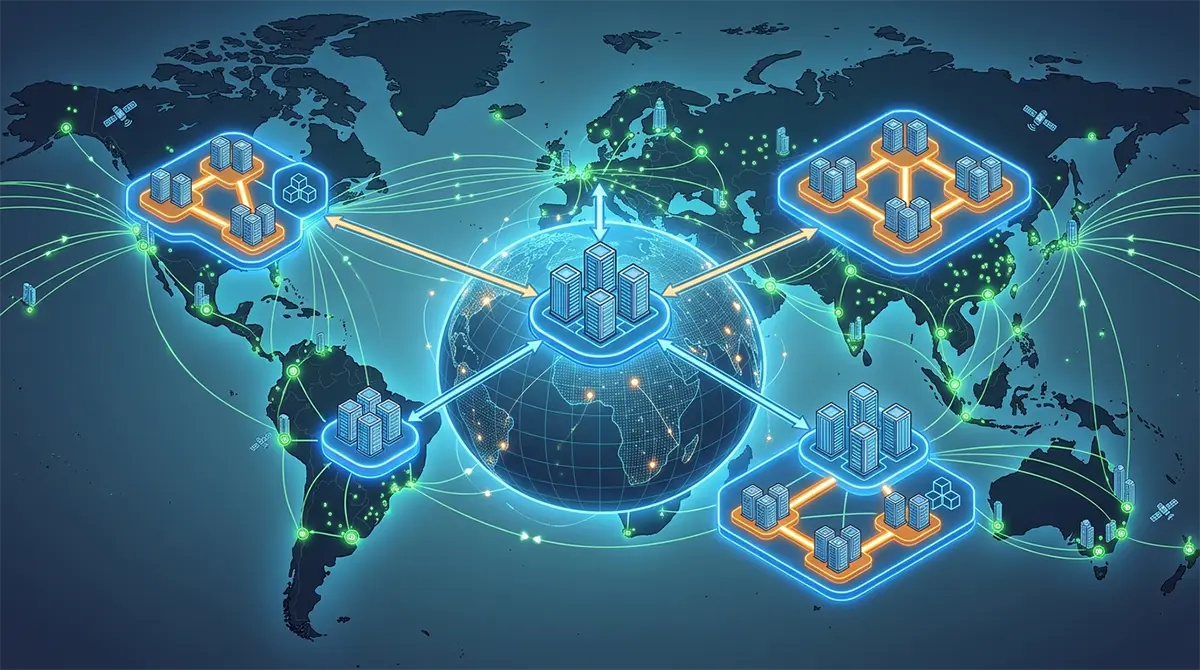
The foundational layer consists of AWS physical infrastructure across regional Data Centers, Availability Zones, and Edge Locations. AWS maintains strict physical security controls at these locations, including multi-factor biometric access controls, 24/7 video surveillance, physical intrusion detection systems, and strict visitor logging. Physical hardware is continuously monitored, and storage devices undergoing decommission or replacement are sanitized or destroyed following stringent industry standards such as NIST 800-88.
Beyond physical sites, AWS manages the host infrastructure layer. This includes the physical servers running custom hypervisors, hardware virtualization layers, storage systems like Amazon S3 host architecture, and the global network backbone connecting regions. AWS is responsible for patching hypervisors, maintaining host hardware reliability, updating firmware, and preventing physical network tampering or unauthorized tap attempts on interconnects.
Finally, AWS manages the foundational software stack that runs abstract and managed services. When using managed databases, serverless platforms, or hosted machine learning environments, AWS handles operating system patching, database engine updates, and runtime environment maintenance to ensure the baseline software layer remains secure and operational.
Security IN the Cloud: What the Customer Owns
Security IN the Cloud represents everything the customer deploys, stores, or configures within their AWS environment. While AWS ensures that the underlying platform is secure, the customer remains entirely responsible for how they configure, populate, and manage their cloud resources. Neglecting customer-side security obligations is the leading cause of data breaches in cloud environments.
Data protection and encryption represent the highest-priority customer responsibility. Organizations own their data completely, meaning they must classify data, define retention policies, and implement encryption both at rest and in transit. AWS provides encryption tools such as AWS Key Management Service and AWS Secrets Manager, but the customer must explicitly configure and enforce encryption policies across storage buckets, database instances, and application volumes.
Identity and Access Management is another primary responsibility of the customer. AWS provides the framework through AWS IAM, but customers must configure policies using the principle of least privilege, enforce multi-factor authentication, manage credential rotation, and define role-based access controls. If a customer grants public access to an sensitive storage repository or uses overly permissive IAM policies, AWS will execute those instructions as configured, leaving the system exposed.
Operating system configuration, application software maintenance, and network firewall rules also fall on the customer for Infrastructure as a Service implementations. Customers deploying Virtual Machines must execute operating system security patching, install host-based intrusion detection software, configure local firewalls, and maintain application code security. Additionally, customers must correctly configure security groups, network access control lists, and routing tables to govern traffic flow.
How Responsibilities Shift Across Cloud Service Categories
The boundary dividing customer and AWS responsibilities is not static; it shifts significantly depending on the service model chosen. AWS services generally fall into three service categories: Infrastructure as a Service, Platform as a Service, and Software as a Service or abstract services.
In an Infrastructure as a Service model, such as Amazon EC2 or Amazon VPC, the customer retains maximum control and, consequently, maximum security responsibility. AWS manages the hypervisor, physical host, and network hardware, but the customer is fully responsible for everything from the guest operating system upward. This includes OS updates, security patches, network firewall rule configurations, application installation, and data protection.
In a Managed Service or Platform as a Service model, such as Amazon Relational Database Service or AWS Elastic Beanstalk, AWS takes on a larger share of the operational workload. For instance, with Amazon RDS, AWS manages operating system patching, database engine installation, automated backups, and underlying host maintenance. The customer’s responsibility shifts to managing database access controls, user accounts, table schemas, network access rules, and enforcing encryption parameters.
In Containerized and Serverless execution models, such as AWS Fargate or AWS Lambda, the responsibility shifts even further toward AWS. Customers do not manage virtual servers, operating systems, or container runtimes. Instead, AWS manages the execution environment, operating system dependencies, and underlying capacity scaling. The customer remains responsible solely for writing secure application code, managing event triggers, configuring IAM execution roles, and protecting the data processed by the functions.
Managing Shared, Inherited, and Customer-Specific Controls
To clarify how security implementation works in practice, controls within the Shared Responsibility Model are categorized into three operational groupings: Inherited Controls, Shared Controls, and Customer-Specific Controls.
Inherited controls are security measures that the customer fully inherits from AWS. Because AWS operates the physical facilities and host systems, customers automatically benefit from the physical security, environmental safeguards, and hardware redundancy engineered into AWS infrastructure. Customers do not need to build physical access control systems or install redundant power generators; these controls are validated through AWS compliance reports.
Shared controls apply to management layers where both AWS and the customer provide requirements and execution within their respective domains. Key examples include:
-
Patch management, where AWS patches host hardware and hypervisors, while the customer patches guest operating systems and application software.
-
Configuration management, where AWS maintains configuration of its infrastructure devices, while the customer configures virtual network routers, firewalls, and operating systems.
-
Awareness and training, where AWS trains its staff on facility and hardware security, while customers train their employees on secure cloud access, credential hygiene, and application deployment.
Customer-specific or customer-driven controls are implemented entirely by the customer based on their unique industry requirements, compliance standards, and internal risk tolerance. These include service and communications protection, application-level encryption, network segmentation using custom subnets, and incident response planning tailored to corporate workflows.
Common Misconceptions and Dangerous Security Blind Spots
Despite the clarity of the model, organizations frequently make assumptions about cloud security that result in operational vulnerabilities. Overcoming these misconceptions is essential for building a resilient cloud architecture.
A pervasive misconception is that migrating workloads to AWS automatically renders them secure and compliant. While AWS provides a secure cloud foundation with extensive compliance certifications, compliance is not transitive. Using a compliant AWS infrastructure does not automatically make a customer’s application compliant; the customer must still configure access controls, audit logs, and encryption protocols correctly to satisfy regulatory requirements.
Another frequent oversight involves data backup and disaster recovery. Customers sometimes assume that because AWS offers high availability and multi-AZ deployment options, data backups happen automatically. In reality, data replication across availability zones protects against hardware failure, not human error, ransomware, or accidental deletion. Customers are fully responsible for defining backup policies, executing periodic data snapshots, and configuring cross-region replication strategies.
Additionally, organizations often overlook API key security and access token hygiene. AWS secures the control plane endpoints, but if an developer commits an AWS access key to a public code repository, unauthorized actors can exploit those credentials to compromise the environment. Managing secret storage, enforcing short-lived session tokens, and establishing automated credential scanning remain entirely on the customer side of the boundary.
Practical Strategies for Operationalizing the Model
To effectively fulfill customer security obligations under the AWS Shared Responsibility Model, organizations should implement structured governance processes and leverage automated security tooling.
First, embrace automation for security configurations and policy enforcement. Manual configuration of cloud resources introduces human error. Utilizing Infrastructure as Code tools allows teams to define secure infrastructure baselines, perform static code analysis on deployment templates, and ensure that every resource deployed conforms to pre-approved security standards.
Second, leverage native AWS security and governance tools designed to assist with customer-side responsibilities:
-
Use AWS IAM Identity Center to centralize access management, enforce strict multi-factor authentication, and eliminate long-lived access keys.
-
Deploy AWS Config to continuously monitor, audit, and evaluate resource configurations against desired compliance guidelines.
-
Enable AWS CloudTrail to log, continuously monitor, and retain account activity related to actions across your AWS infrastructure.
-
Activate Amazon GuardDuty for intelligent threat detection and continuous monitoring of AWS accounts, workloads, and data stored in Amazon S3.
-
Utilize AWS Security Hub to aggregate security findings from multiple AWS services and partner tools into a single pane of glass.
Third, engage external expertise when internal capabilities or regulatory demands exceed team capacity. Partnering with a specialized external firm, such as an aws consultant dubai enterprise guide, can accelerate cloud compliance initiatives, audit existing architectures for security gaps, and establish robust cloud governance frameworks tailored to regional and international standards.
Finally, conduct regular third-party security audits and penetration testing. While AWS tests and certifies the underlying infrastructure, organizations must regularly audit their application code, network security group rules, and IAM policy permissions to identify emerging vulnerabilities before they can be exploited.
Aligning Cloud Compliance and the Responsibility Boundary
Regulatory compliance in the cloud requires a clear understanding of how the Shared Responsibility Model maps to industry frameworks such as ISO 27001, SOC 2, PCI DSS, and HIPAA. Compliance is a shared effort where customers utilize AWS audit reports to satisfy infrastructure-level requirements while providing their own evidence for higher-level controls.
AWS provides customers with on-demand access to compliance documentation through AWS Artifact. Through this portal, security teams can download AWS SOC reports, PCI DSS Attestations of Compliance, and ISO certifications. These documents serve as official proof to external auditors that the underlying physical and virtual infrastructure meets strict regulatory requirements.
However, the auditor will still require proof of customer-side compliance. For instance, under PCI DSS, AWS demonstrates that the physical data center and hypervisors meet cardholder data environment standards. The customer must demonstrate that payment applications running on EC2 instances are securely coded, cardholder data is encrypted using customer-managed keys, and access logs are monitored continuously.
By clearly documenting the division of responsibilities within corporate security policies, organizations can streamline the audit process, eliminate duplicate control implementations, and ensure full coverage across all regulatory domains.
Essential Best Practices for Fulfilling Customer Obligations
To build a secure and resilient cloud posture on AWS, security leaders should integrate the following foundational practices into their daily operational workflows:
-
Standardize on the principle of least privilege across all IAM roles, groups, and service policies, ensuring users and applications receive only the explicit permissions necessary to perform their tasks.
-
Enforce default encryption at rest for all storage services, including Amazon S3 buckets, Amazon EBS volumes, Amazon RDS databases, and DynamoDB tables.
-
Secure network perimeter access by restricting security group rules, eliminating unrestricted inbound access from public IP ranges, and routing traffic through web application firewalls.
-
Implement robust centralized log management by enabling AWS CloudTrail, VPC Flow Logs, and DNS logs, sending log streams to a secure, isolated S3 bucket with object lock enabled.
-
Conduct continuous vulnerability management on guest operating systems, container images, and application dependencies to identify and patch security weaknesses proactively.
-
Establish a documented and tested incident response plan specific to cloud environments, incorporating automated containment workflows for compromised credentials or exposed resources.
Navigating the Future of Cloud Security and AI Responsibilities
As AWS expands its service offerings into generative artificial intelligence and specialized machine learning platforms like Amazon Bedrock and Amazon SageMaker, the Shared Responsibility Model continues to evolve. Understanding how responsibilities apply to AI architectures is becoming a critical requirement for modern technology teams.
In generative AI and machine learning workloads, AWS assumes responsibility for securing the underlying infrastructure, training hardware clusters, foundational model hosting platforms, and base model architectures. AWS ensures that customer data used with services like Amazon Bedrock is encrypted, isolated, and explicitly not used to train or improve underlying base models for other customers.
The customer retains responsibility for the data inputs, fine-tuning datasets, prompt engineering security, output validation, and application-level access controls. Customers must ensure that sensitive data submitted to AI endpoints complies with internal privacy policies, that custom fine-tuned models are protected with strict IAM policies, and that application interfaces prevent input manipulation or prompt injection attacks.
By maintaining a clear understanding of the Shared Responsibility Model as cloud technologies advance, organizations can confidently innovate on AWS, knowing precisely how to safeguard their infrastructure, applications, and sensitive digital assets.