


The evolution of artificial intelligence from an experimental playground into a core driver of enterprise value has exposed a profound chasm between strategic intent and operational reality. Organizations worldwide are committing substantial capital to machine learning models, generative platforms, and cognitive automation, yet a vast majority struggle to move these initiatives past localized pilot projects. This friction rarely stems from a lack of technological sophistication or inadequate model performance. Rather, it is rooted in structural fragmentation. When artificial intelligence capabilities are developed in isolation divorced from underlying data architectures, operational workflows, cross-functional governance, and dynamic feedback loops execution falters.
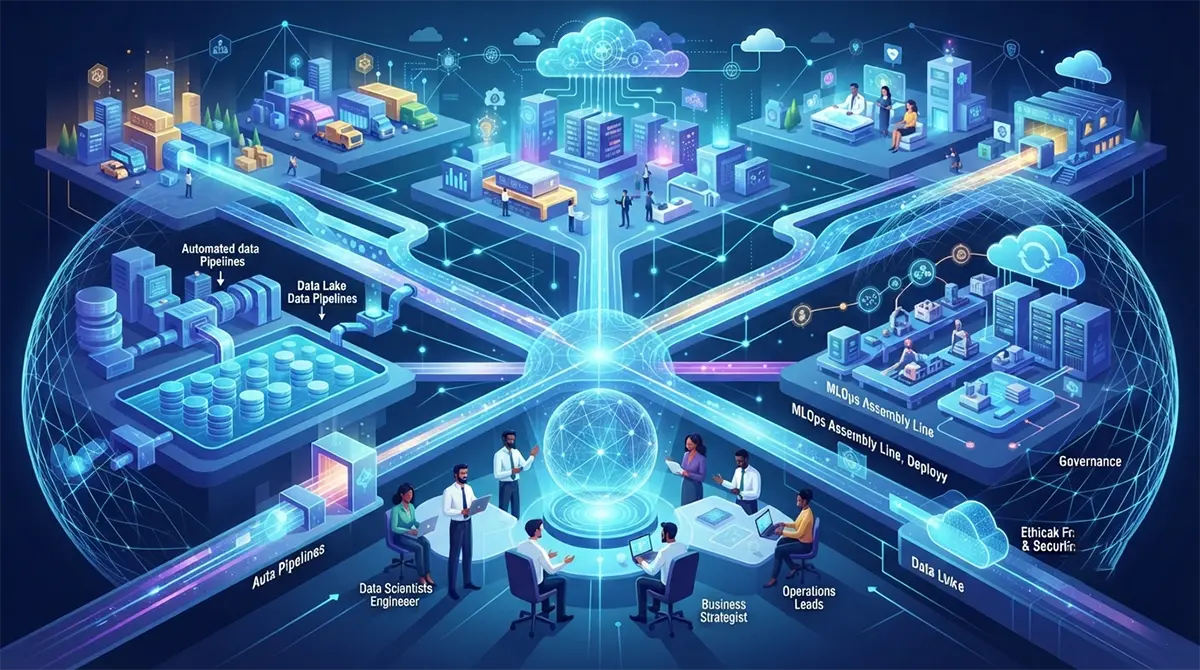
Overcoming this implementation barrier requires a fundamental shift in perspective: moving away from treating artificial intelligence as a collection of standalone software tools and toward cultivating an integrated ecosystem. An integrated ecosystem functions as an organizational operating system for intelligence, harmonizing infrastructure, data pipelines, model orchestration, risk controls, and human capital into a synchronized framework. By aligning these moving parts, enterprises can transform sporadic automation efforts into predictable, scalable, and value-generating execution engines. Understanding how this holistic approach systematically improves execution outcomes illuminates the path from speculative innovation to sustainable competitive advantage.
Deconstructing the Fragmented AI Lifecycle and Its Hidden Costs
To appreciate the corrective power of an integrated ecosystem, one must first examine the systemic failures of fragmented artificial intelligence deployments. In a traditional siloed operating model, data engineering teams, data scientists, software developers, and business stakeholders operate within distinct operational bubbles. Data teams curate information without a clear line of sight into downstream model requirements. Developers build custom integration wrappers to push models into production without standardized deployment pipelines. Meanwhile, business leaders evaluate outcomes based on high-level Key Performance Indicators that have little connection to the technical realities of inference latency, drift, or token costs.
This fragmentation introduces friction at every phase of the implementation lifecycle. Without shared tooling or unified governance, projects face severe bottlenecks during handoffs. A model that performs brilliantly in a controlled data science sandbox frequently breaks when exposed to live, messy enterprise data environments. Security teams, brought in at the eleventh hour to review compliance, often halt deployments entirely due to unaddressed vulnerabilities in data privacy or model governance. These delays inflate development costs, dilute return on investment, and demoralize technical talent. Furthermore, when performance degradation occurs in production, identifying the root cause becomes a chaotic blame game between infrastructure providers, database administrators, and model developers. The ultimate cost of this fragmentation is not merely wasted capital, but organizational fatigue and strategic paralysis.
Unifying Data Architecture as the Foundation of Reliable Execution
At the heart of any high-performing artificial intelligence ecosystem lies a unified, resilient data architecture. Models are inherently data-dependent entities; their execution outcomes are directly bounded by the quality, provenance, and accessibility of the information flowing through them. In an integrated ecosystem, data strategy is not treated as a prerequisite checklist item, but as an active, continuous feedback loop deeply interconnected with model training and inference.
Unified data management bridges the historical divide between operational databases, analytical data warehouses, object storage, and specialized vector databases required for retrieval-augmented generation. By establishing centralized data catalogs, automated data quality guardrails, and real-time streaming capabilities, an integrated ecosystem ensures that every model draws from a single source of truth. This architectural cohesion drastically reduces the time spent on manual data cleansing a bottleneck that historically consumes up to eighty percent of a data scientist’s time. When data pipelines are standardized and automated, models receive clean, compliant, and contextually rich inputs continuously. Consequently, execution outcomes shift from erratic, unpredictable outputs to stable, high-confidence decisions that enterprise leaders can trust for mission-critical operations.
Streamlining MLOps and Infrastructure Orchestration for Scale
Moving artificial intelligence from a static prototype to a dynamic, production-ready asset requires robust infrastructure orchestration. In an integrated ecosystem, infrastructure and operational workflows merge through mature Machine Learning Operations practices. Rather than relying on bespoke deployment scripts that vary from project to project, an integrated ecosystem standardizes the entire deployment pipeline from continuous integration and continuous deployment frameworks to automated model monitoring and retraining loops.
This operational standardization removes the friction of scaling artificial intelligence across business units. Infrastructure platforms dynamically allocate compute resources whether central processing units, graphics processing units, or specialized accelerators based on real-time workload demands, optimizing cloud expenditure and minimizing latency. Furthermore, integrated monitoring tools track model drift, data degradation, and inference anomalies automatically. When performance drops below acceptable thresholds, automated triggers initiate retraining workflows or alert engineering teams before business operations are negatively impacted. Organizations that streamline these underlying technical workflows find it much easier to attract and retain specialized engineering talent, often benchmarking regional compensation structures against competitive global standards such as those seen for DevOps Services in Dubai and Linux dubai salary metrics to ensure their technical teams remain motivated, well-compensated, and fully equipped to maintain high-availability systems.
Embedding Governance, Trust, and Security Across the Stack
As artificial intelligence systems assume greater autonomy in customer-facing and mission-critical workflows, governance can no longer be an afterthought or an external compliance hurdle. An integrated ecosystem weaves security, ethics, and regulatory compliance directly into the fabric of the technology stack. This proactive approach transforms governance from a restrictive bottleneck into an enabler of speed and confidence.
Embedding trust at the ecosystem level involves establishing automated guardrails that protect sensitive information, prevent prompt injections and adversarial attacks, and ensure adherence to data privacy regulations. Identity and access management protocols are extended to govern not only human users, but also autonomous software agents and application programming interfaces interacting with models. By automating compliance documentation, bias detection, and output explainability checks within the development pipeline, organizations minimize legal exposure and reputational risk. When risk management and innovation operate in lockstep, stakeholders across legal, compliance, and technical departments share a common language and unified visibility. This transparency accelerates approval gates, empowering teams to deploy sophisticated capabilities rapidly without compromising organizational safety or regulatory integrity.
Aligning Cross-Functional Teams and Operating Models for Value Realization
Technology and data architecture alone cannot guarantee successful execution; the human and organizational dimensions of an ecosystem are equally critical. An integrated ecosystem redefines operating models to break down traditional departmental silos, fostering deep cross-functional collaboration between business strategists, domain experts, data scientists, and front-line operators.
In a mature ecosystem, strategic goals are translated into clear, measurable execution metrics that cascade seamlessly down to individual technical tasks. Business units are actively involved in co-designing use cases, ensuring that technical capabilities directly address genuine operational bottlenecks rather than chasing novelty. This alignment is reinforced by establishing clear roles, decision rights, and accountability frameworks, often supported by dedicated internal enablement teams or specialized external partners who provide Best tech support dubai and operational guidance when scaling complex digital transformations. By fostering a culture of continuous learning, psychological safety, and shared ownership, organizations ensure that their workforce embraces automated workflows rather than resisting them. The result is a synchronized enterprise where human ingenuity and artificial intelligence capabilities amplify one another, compressing the timeline from concept to measurable business value from years into months.
Cultivating Continuous Feedback Loops and Adaptive Strategy
The ultimate testament to an integrated ecosystem is its capacity for continuous learning and adaptation. Traditional business strategies are often static, linear plans designed for predictable environments. However, the operational landscape shaped by artificial intelligence is dynamic, fast-moving, and characterized by rapid technological breakthroughs and shifting market conditions. An integrated ecosystem treats strategy itself as an adaptive, iterative process driven by continuous feedback loops.
Every interaction, customer touchpoint, and operational outcome generated within the ecosystem feeds back into the central intelligence layer. Performance metrics, user feedback, and economic indicators are synthesized in real-time, providing leadership with actionable insights regarding where artificial intelligence is creating genuine enterprise value and where adjustments are required. This continuous feedback mechanism enables organizations to pivot quickly, deprioritize underperforming initiatives, and double down on high-impact use cases. By institutionalizing this agility, businesses insulate themselves against disruption and build a resilient operating model capable of absorbing technological shocks. Ultimately, an integrated ecosystem does not just optimize the execution of today’s artificial intelligence strategy it builds the organizational muscle required to invent and master the strategic paradigms of tomorrow.